
The Ultimate Guide to Radiator Covers: Style, Safety, and Staying Warm
| TL;DR: Radiator Covers transform a functional radiator into a safe, stylish console table for adding decor or as a useful shelf. Heat Output: Our radiator covers deliver maximum output thanks to their clever designs. To maintain efficiency, choose a cover with a vented top and large grille patterns. Safety & Style: Radiator covers protect children and pets from hot radiators, and they are a major aesthetic upgrade for your home. Top Tip: Use a radiator reflector panel behind the unit to counter heat loss and improve efficiency. |
As the seasons change, many of us look for ways to refresh our interiors and create a more comfortable, welcoming space. Radiator covers have become a hugely popular solution, transforming a purely functional item into a stylish piece of furniture.
But do they block heat? Are they worth the investment? At Jack Stonehouse, we specialise in helping you make the most of your home, and we’re here to give you the authoritative, technical breakdown you need to make an informed choice.
Jump to:
- What is the Purpose of a Radiator Cover?
- Does a Radiator Cover Block Heat?
- The Technical Breakdown: How Heat is Affected
- Optimising Your Cover for Maximum Warmth
- How to Measure for a Radiator Cover
- Practical Tips & FAQs
- Choose Your Perfect Radiator Cover at Jack Stonehouse
What is the Purpose of a Radiator Cover?
Before diving into heat performance, it’s worth noting the benefits that make radiator covers a worthwhile addition to many homes.
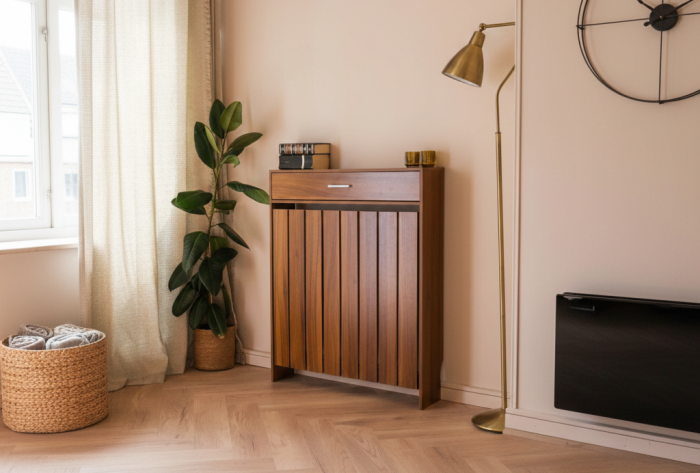
- Aesthetics: A radiator cover instantly hides a utilitarian and often dated-looking radiator, transforming it into a piece of furniture—like a console table. This addition allows you to create a clean, elegant look.
- Safety First: This is one of the most important reasons. Radiators, especially older cast-iron models or those running at high temperatures, can pose a burn risk, particularly for young children and pets. A sturdy cover acts as a protective barrier.
- A Functional Shelf: They create a useful surface area, perfect for displaying photos, books, or plants.
- Heat Distribution: A well-designed cover can actually help direct the heat flow into the room more effectively by encouraging convection.
Does a Radiator Cover Block Heat?
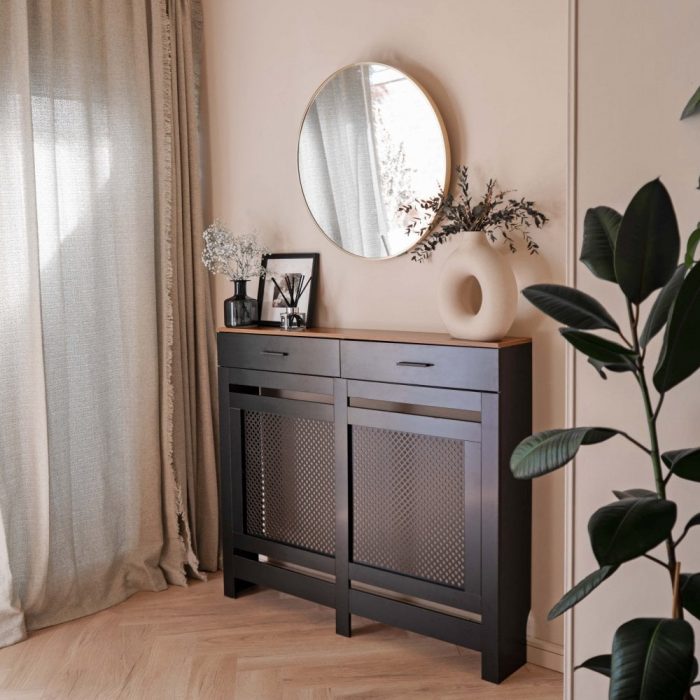
A well-designed radiator cover with vents or slats will only have a minimal impact on heat distribution, allowing heat to circulate freely. While minimal heat may be lost, it is often outweighed by the cover’s style and safety features.
The Technical Breakdown: How Heat is Affected
To understand the impact, we need to look at how a radiator actually heats a room:
- Convective Heat (The Main Method): Hot air rises. The radiator heats the air immediately around it, which then rises to the ceiling, pulls in cooler air from the floor, and circulates throughout the room.
- Radiant Heat (The Direct Warmth): The warmth you feel when standing near the radiator.
A radiator cover can impede both of these if improperly installed or designed:
- Radiant Heat Loss: The cover’s solid material can block immediate radiant heat.
- Convective Heat Alteration: The cover changes how the air circulates. If the cover is poorly designed or sized, it can trap a pocket of hot air, reducing the efficiency of the convection current that warms the room. This effect underscores the importance of seeking clever, efficient designs.
Optimising Your Cover for Maximum Warmth
If you’re opting for a cover for its style and safety benefits, there are several ways to select and use it to maximise the heat that enters your room.
| Feature | Recommended Choice | Why? |
|---|---|---|
| Material | MDF or Wood with a Reflector | MDF is the standard, safe choice. You can counter its insulating properties by installing a radiator reflector panel behind it. This foil-backed foam bounces radiant heat back into the room, effectively mitigating any heat trapped by the cover. |
| Grille | Larger, Open Patterns | The more surface area available for air to pass through, the better. Covers with large, open grille patterns allow for better convective exchange than those with solid panels or very dense, small slats. Choose from diamond patterns, vertical or horizontal slats in our selection. |
| Clearance | Generous Sizing (Optimal Dimensions) | For maximum efficiency, your cover should be: – At least 3cm taller than the radiator – At least 3cm deeper than the radiator – At least 5cm wider than the radiator. This vital air clearance prevents heat buildup and allows unrestricted air circulation. Adjustable radiator covers are great for ensuring this. |
How to Measure for a Radiator Cover
Finding the right size is the single most important factor for both aesthetics and thermal performance.
- Measure the Height: Measure from the floor to the top of the radiator (including the pipe and valve if necessary). Add at least 3cm for internal clearance.
- Measure the Width: Measure from one side of the radiator to the other (including any valves). Add at least 5cm for internal clearance.
- Measure the Depth: Measure from the wall to the radiator’s front face. Add at least 3cm for internal clearance.
Example: If your radiator is 80cm High x 120cm Wide x 10cm Deep, you should look for a cover with internal dimensions of at least 83cm H x 125cm W x 13cm D. Always check the external dimensions to ensure it fits your space.
Practical Tips & FAQs
Are Radiator Covers Energy Efficient? (And are they bad for heating bills?)
While a cover can slightly reduce the radiator’s direct output, the impact on your energy bills is usually minimal and not a primary factor.
What to Put on a Radiator Cover
Radiator covers make a perfect display shelf, but you should be mindful of the heat they generate.
- Safe Items: Photos in frames, small ornaments, hardback books, and seasonal plants are all safe bets.
- Items to Avoid: Scented candles or anything that can melt; soft-backed books (which can curl or warp); and electronic devices, which can be damaged by heat.
How to Attach a Radiator Cover to the Wall
While our Jack Stonehouse covers are designed to be freestanding and stable, a wall attachment is recommended for homes with young children to ensure safety.
Most covers come with a simple “L” bracket system. You attach the small brackets to the inside back of the cover and screw them into the wall securely. Doing this prevents the cover from being accidentally pulled forward.
What Paint to Use on an MDF Radiator Cover
For the best results on MDF, follow this system:
- Choose your paint: Use a heat-resistant paint. Oil-based is recommended for durability, though water-based is also suitable.
- Prime: Always apply a primer first, particularly if the MDF is unfinished.
- Apply: Use a heat-resistant satin or enamel. Apply 2–3 thin coats rather than one thick coat to ensure a smooth, patch-free surface.
Choose Your Perfect Radiator Cover at Jack Stonehouse
Ultimately, when deciding whether to buy a radiator cover, the choice comes down to balancing style and safety against a minor reduction in heat output. With our range of well-designed, functional MDF radiator covers—from small to extra-large—you can transform your space without compromising comfort.
Browse our collection today and find the perfect cover to complete your cosy home!
Comments are closed here.