
Can You Put a Fire Pit on Decking? Garden Heating Safety Rules & Smart Alternatives
Transforming a patio or garden deck into a warm seating area allows you to use your outdoor space year-round. However, concerns about extreme heat, scorched timber, and safety hazards often make homeowners hesitant to install a heater. Whether you are worried about burning composite decking or melting a gazebo canopy, following the right garden heating safety rules will keep your home protected while creating a comfortable outdoor setup.
Summary
- Direct placement on wood or composite decking is unsafe: intense downward heat can scorch timber, melt composite boards, or spark structural fires.
- Heat barriers are mandatory: Solid-fuel burners require non-combustible bases, such as heavy paving slabs combined with insulated heat mats.
- Covered areas require electric options: Never burn solid fuel under gazebos or awnings; choose wall-mounted or hanging electric heaters with 1.8 metres of clearance.
- Check IP ratings for UK weather: Select outdoor electric heaters rated IP44 or higher to safely withstand British rain and moisture.
Content
Can You Put a Fire Pit on Decking?
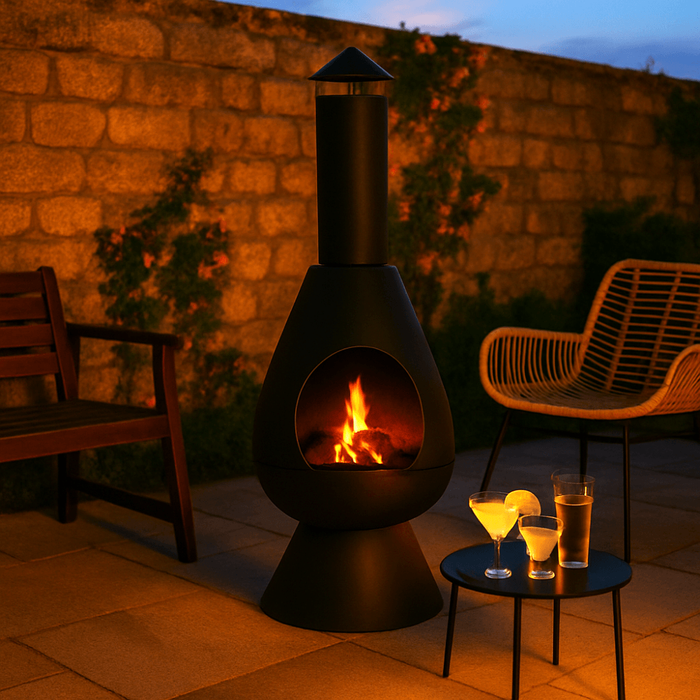
Placing a solid-fuel fire pit directly on timber or composite decking is unsafe due to intense radiant heat, stray embers, and the risk of structural damage. Timber can scorch or ignite, while composite boards soften, melt, or discolour under thermal stress. To safely operate a fire pit on decking, install a non-combustible barrier with thick paving slabs and an insulated, heat-resistant mat.
While an open flame may look appealing on a raised wooden deck, intense radiant heat poses a major structural fire risk. Solid-fuel fire bowls, log burners, and chimineas reach internal temperatures exceeding 600°C. This intense heat radiates in all directions, including straight down through metal bases and legs.
The Risk to Timber Decking
Timber decking is inherently flammable. As solid fuel burns over several hours, wood deck boards directly beneath a burner dry out completely. This process, known as pyrolysis, significantly lowers the timber’s ignition temperature over time. A stray spark falling into the narrow gaps between deck boards can easily ignite dry debris underneath, causing a fire that is difficult to extinguish quickly.
The Risk to Composite Decking
Composite decking is made from a blend of wood fibres and plastic polymers. While composite boards are durable and low-maintenance, plastic components begin to soften at temperatures as low as 60°C to 70°C.
Placing hot metal fire pit legs directly on composite decking can cause:
- Deep indentations and permanent sagging under thermal weight.
- Discolouration and scorching that cannot be sanded out.
- Complete warping or melting of the core board structure.
Essential Safety Gear and Setup Rules for Outdoor Fire Pits
Safe outdoor heating requires strict clearance distances and protective equipment. Position solid-fuel burners at least 3 metres away from combustible structures, boundary fences, and low-hanging branches. Always place heavy concrete or porcelain pavers beneath the burner base to block radiant heat transfer, and fit a mesh spark guard to capture airborne embers. Keep an extinguishing agent, such as dry sand, nearby at all times.
To operate a solid-fuel burner safely without damaging surrounding garden surfaces, follow these essential safety preparations:
1. Build a Multi-Layer Heat Shield
Never rely on a single thin sheet of metal or a basic mat to block extreme heat. Create a multi-layered protective barrier directly beneath the fire pit:
- Base Layer: Place heavy-duty porcelain pavers, concrete flags, or thick stone tiles under the burner legs. Ensure the base extends at least 30cm beyond the outer rim of the fire bowl in all directions.
- Air Gap: Use small rubber spacers or non-combustible feet beneath the paving slabs to elevate them slightly above the deck boards. This allows cooling air to circulate beneath the slab, preventing heat from sinking into the wood or composite surface.
- Top Layer: Add an insulated, commercial-grade fire pit heat mat over the paving slabs to reflect radiant heat upward and catch falling ash.
2. Maintain Clear Distance Boundaries
Keep your fire pit at least 3 metres away from any combustible object. This includes wooden garden fences, sheds, overhanging tree branches, outdoor furniture cushions, and house walls.
3. Contain Flying Embers
Always place a mesh spark guard cap over the burner when using wood or charcoal. Softwoods like pine tend to crackle and pop, launching tiny embers several metres into the air. A mesh guard contains these sparks before they land on synthetic turf, garden furniture, or gaps in dry decking.
4. Keep Extinguishing Supplies Ready
Never use water to extinguish a hot cast-iron or steel fire pit, as the sudden temperature drop (thermal shock) can permanently crack the metal bowls. Instead, keep a bucket of dry sand or a Class A/B dry powder fire extinguisher nearby to smother flames safely in an emergency.
Safe Gazebo Heating: Electric Wall-Mounted and Hanging Heaters
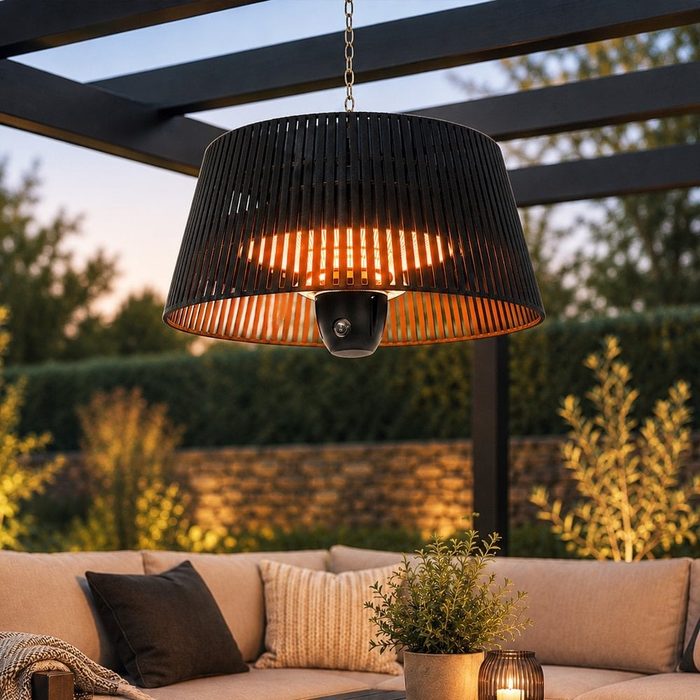
Never use open flames or solid-fuel fire pits inside or under gazebos, canopy tents, or fabric marquees. Smoke accumulation and carbon monoxide pose severe health risks, while rising heat can easily melt or ignite fabric ceilings. Electric heating solutions offer a clean, spark-free alternative. Hanging halogen or infrared heaters installed with a minimum clearance of 1.8 metres from the ground deliver safe, direct warmth.
Sheltered garden spaces like gazebos, awnings, and pergolas are fantastic for extending outdoor gatherings into chilly evenings. However, enclosed spaces present unique heating challenges that make open flames extremely dangerous.
| Heating Type | Suitable for Gazebos? | Primary Risks | Best Application |
| Solid-Fuel (Wood/Coal) | No | Carbon monoxide poisoning, sparks, fabric canopy ignition | Open lawns, paved patios |
| Gas Bottle Heaters | No (Unless open-sided) | Oxygen depletion, heavy fumes, tip-over hazard | Open-air commercial patios |
| Electric Hanging Heaters | Yes | Incorrect mounting height (if under 1.8m) | Gazebos, covered pergolas |
| Electric Wall Heaters | Yes | Direct contact with wall fabrics | Fixed garden walls, heavy timber frames |
Why Electric Heating is Superior for Covered Areas
Electric patio heaters use infrared or halogen technology to emit direct radiant warmth. Unlike convection heat (which warms the air and drifts away in a breeze), infrared warms objects and people directly.
Crucially, electric heaters produce no carbon monoxide, smoke, or flying sparks, making them 100% safe for covered, semi-enclosed garden buildings.
Key Clearance Measurements for Gazebo Heaters:
- Gazebo Canopy Ceiling: Positioned at the top.
- Safety Ventilation Gap: Maintain a 30cm to 50cm gap between the canopy ceiling and the top of the heater.
- Electric Heater Position: Suspended securely beneath the gap.
- Floor Clearance: Maintain a minimum of 1.8 metres of clearance from the ground to the bottom of the heater.
Key Installation Guidelines for Electric Heaters
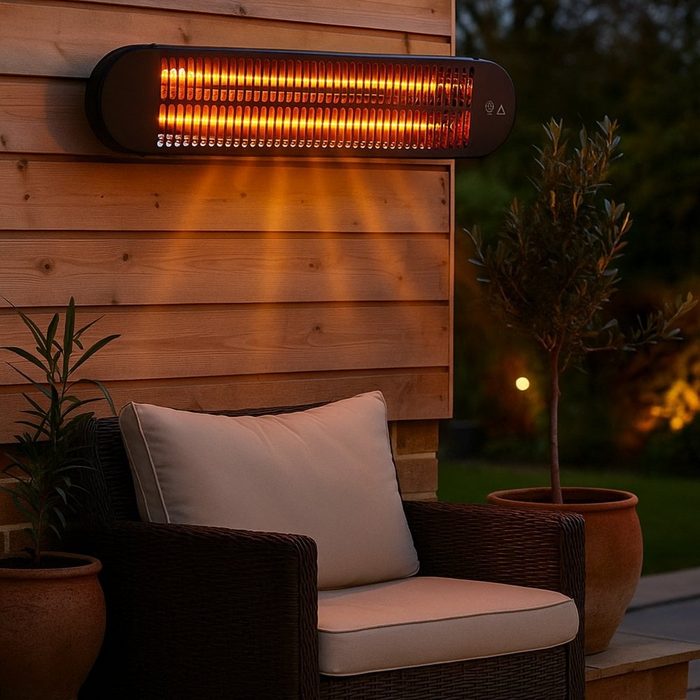
- Vertical Clearance: Position hanging or wall-mounted heaters so that the lowest heating element is at least 1.8 metres (5’9”) above floor level. This prevents accidental head contact and ensures safe heat distribution.
- Ceiling Clearance: Maintain a gap of 30–50 cm between the top of a hanging heater and the roof canopy of your gazebo or pergola to prevent heat buildup on the overhead fabric.
- Secure Anchor Points: Always attach hanging heaters to structural timber joists or heavy metal frame nodes that can securely support the weight. Never hang heaters from lightweight canvas tie-loops.
For homeowners wanting effortless warmth under shelter without open-flame hazards, exploring energy-efficient hanging patio heaters provides a simple, overhead plug-and-play solution.
Understanding IP Weatherproof Ratings for British Gardens
Ingress Protection (IP) ratings define how effectively an electric garden heater resists solid particles and liquid moisture. Given the unpredictable nature of British weather, any outdoor electric heater should have at least an IP44 rating, which protects against water splashes from any direction. Higher protection levels, such as IP65, offer total dust resistance and protection against heavy rain jets, ensuring long-term outdoor safety.
Understanding IP ratings helps you choose an electric heater that stays safe and durable in wet British weather.
An IP rating consists of two numbers (for example, IP44):
- First Digit (Protection against solids): Measures defence against objects, dust, and debris (scale: 0 to 6).
- Second Digit (Protection against liquids): Measures defence against water ingress (scale: 0 to 8).
IP Rating Guide for Garden Heaters
- IP24 (Basic Outdoor Protection): Protected against objects larger than 12mm and light water splashes. Use under covered gazebos and store indoors during heavy rain.
- IP44 (Standard British Weather Requirement): Protected against small solid objects (> 1 mm) and splashing water from all angles. Safe for general outdoor installation, handling typical rainfall without issue.
- IP65 (Heavy-Duty Weatherproofing): Completely dust-tight and protected against direct low-pressure water jets from a hose or torrential downpours. Ideal for year-round wall mounting without shelter.
Always ensure your outdoor power supply connects via a weatherproof RCD (Residual Current Device) protected socket installed by a qualified electrician.
Frequently Asked Questions (FAQs)
Will a fire pit heat mat protect my composite deck on its own?
No, a thin fire pit heat mat alone is rarely sufficient for composite decking. Heat mats catch falling embers and reflect radiant heat, but they don’t prevent long-term thermal conduction. Under heavy use, heat can pass straight through a thin mat and soften or discolour composite boards. Always pair a heat mat with a raised non-combustible base, such as stone or concrete pavers with rubber foot spacers.
Can you put a gas fire pit on decking?
Yes, gas fire pits are generally safer for decking than solid-fuel models because they emit no flying sparks, ash, or popping embers. However, gas burners still generate significant downward heat. Check the manufacturer’s instructions to confirm the model is rated for timber or composite placement, and use an approved thermal shield or deck protector plate beneath the burner base if required.
How high should an electric patio heater be hung under a gazebo?
Position an electric hanging patio heater at a minimum height of 1.8 metres (6 feet) from the ground to the base of the heater. Additionally, maintain a safety gap of at least 30cm to 50cm between the top of the heating unit and the ceiling canopy of your gazebo or pergola to ensure proper heat ventilation.
Can electric patio heaters be left outside in British winter rain?
Electric patio heaters rated IP44 or IP65 are specifically built to withstand wet outdoor environments. While IP65 units can remain mounted outdoors through heavy rain, using a weather-resistant protective cover when the heater is off and cool will extend its lifespan, protect electrical components from frost, and prevent insects or dirt from clogging the heating elements.
Creating a Safe, Warm Outdoor Space
Keeping your garden warm on chilly UK evenings doesn’t mean compromising safety or damaging your outdoor living space. While solid-fuel fire pits require heavy concrete paving bases, strict clear zones, and constant monitoring, electric alternatives offer instant heat without structural hazards.
If you want to heat a timber deck, composite patio, or sheltered gazebo space worry-free, upgrading to an electric model eliminates the risk of carbon monoxide and flying embers. Take the doubt out of garden safety by browsing our range of wall-mounted and hanging patio heaters to find the perfect match for your space.
Read Next
Why should I buy an oil-filled radiator?
A buyer’s guide to energy-efficient portable heaters
Oil-Filled Radiator vs Electric Heater: Your Complete Winter Warming Guide
Comments are closed here.