
The Ultimate Buying Guide: Which Indoor Heating Solution Is Right for You?
In the UK, whenever the temperature drops, it doesn’t always make sense to depend entirely on central heating from a practicality or cost perspective. It would be a waste of energy to heat the whole house when all you are doing is using one home office or living room. If you choose the right supplementary heater, then you will be able to warm both yourself and the room in which you are, and thus remain comfortable without having to spend a great deal on your electricity bills.
Since there are so many portable heaters available, it can be rather confusing to have to choose between getting immediate warmth and going for long-term energy efficiency. Our comprehensive buying guide examines the main differences between fan-assisted models and oil-filled radiators so that you may make a well-informed choice when selecting a heater suitable to your daily routine, the size of the room, and your budget.
Quick Takeaways
- Electric fan heaters provide warmth right away in a directed manner, which makes them appropriate for use in small areas, for short-term tasks, and for quickly heating a room.
- Since oil-filled heaters have good thermal insulation, it is because of this that they emit a silent, continuous, and long-lasting ambient heat and are therefore suitable for use in bedrooms and living rooms.
- The figure for the running costs has to be determined by the wattage and the method of thermostat control, even though oil radiators generally end up being cheaper over a long period because they retain the heat after switching off.
- You have to choose between speed and duration; if you want fast, local heating, get an indoor fan heater, and if you prefer continuous comfort, then get an oil-filled radiator.
Content
- How to Choose the Right Indoor Heating for Your Home
- Electric Fan Heaters: Fast, Targeted Warmth on Demand
- Oil-Filled Radiators: Sustained, Energy-Efficient Heat
- Fan Heaters vs Oil-Filled Heaters: Head-to-Head Comparison
- What Does Indoor Heating Cost? Calculating Running Costs.
- Helpful Tips to Optimise Efficiency
- Safety Guidelines for Portable Domestic Heaters
- Frequently Asked Questions (FAQs)
- Finding Your Heating Solution with Jack Stonehouse
How to Choose the Right Indoor Heating for Your Home
The selection of an appropriate indoor heater should take into account the size of the room, how frequently it is used, and how quickly warmth is needed.
Electric fan heaters give off quick, short-term, directed heat and are suitable for home offices and small areas. On the other hand, an oil-filled heater provides silent, steady heat and has excellent heat retention, making it suitable for bedrooms and living rooms.
Matching the wattage of the heater to the dimensions of the room ensures optimal thermal comfort and, at the same time, keeps your electricity bills strictly under control.
The choice of a suitable indoor heater will depend on the different ways in which various technologies transmit heat to a room; portable domestic heaters generally operate on one of two primary thermal principles: heating the surrounding air or radiation (by directly heating up surfaces and people).
Heating Demand (Watts) = Room Volume (m³) × Insulation Factor (30W to 50W)
To calculate your required capacity accurately:
- If you want to calculate the cubic volume (in m³), measure the length, the width, and the ceiling height of your room, making sure to do so in metres.
- For modern houses that are well insulated and have double glazing, multiply the volume by 30 Watts.
- In the case of older buildings having draughty windows, high ceilings, or solid brick walls, multiply the power by a figure between 40 and 50 Watts.
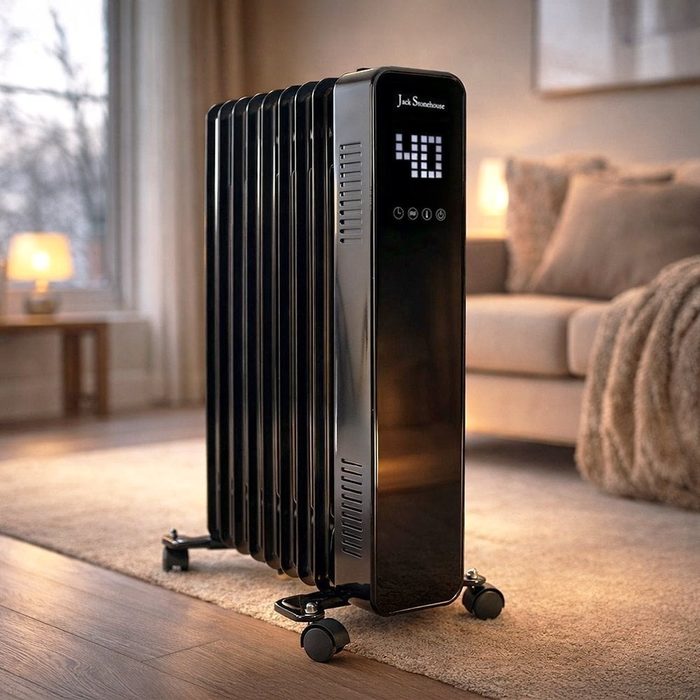
Electric Fan Heaters: Fast, Targeted Warmth on Demand
An electric fan heater warms a room by drawing air over a heated electric element and then blowing that air into the room. Because of this, it is the quickest choice available for providing immediate, focused warmth in small rooms, home offices, and cold utility areas. Although it is louder and less effective for continuous night-time heating than radiator types, fan heaters are good at delivering quick, low-cost bursts of personal comfort.
An electric fan heater operates according to the principle of forced convection; it draws in cold air, passes it over a heating element which is made of ceramic or metal, and then blows the air outwards with the aid of an electric fan. The heating not relying on natural air circulation means that the change in temperature in the area surrounding you occurs almost immediately.
Main Benefits
- Quick Operation: You experience quick thermal relief because the warm air starts blowing directly onto you a few seconds after you turn the dial.
- Lightweight and Compact: They are compact and lightweight since most of them weigh less than 2 kg, which makes it easy to move them from your home office to the workshop or dining area.
- Directed Flow: With oscillating bases, you can direct the warm air in a wide arc or aim the flow of air directly at your desk or at your seating area.
- Multi-Use: One useful thing about the summer is that many of the high-quality fan units come with a special ‘cool blow’ setting, which enables the appliance to be used as a desk fan during the warmer parts of the year.
Considerations and Limitations
Because an indoor fan heater always moves air, it produces a constant noise which can be disturbing in quiet bedrooms or during video calls. Additionally, the forced airflow can lift dust particles, possibly causing mild irritation in people who have asthma or allergies. The room cools down rapidly when the fan heater is switched off since this kind of heater does not hold thermal energy.
Best Used For
- Sessions lasting from 15 to 45 minutes can be used to get rid of the morning chills.
- Providing heated desks for people working from a distance.
- Things like utility rooms, box rooms, and craft studios.
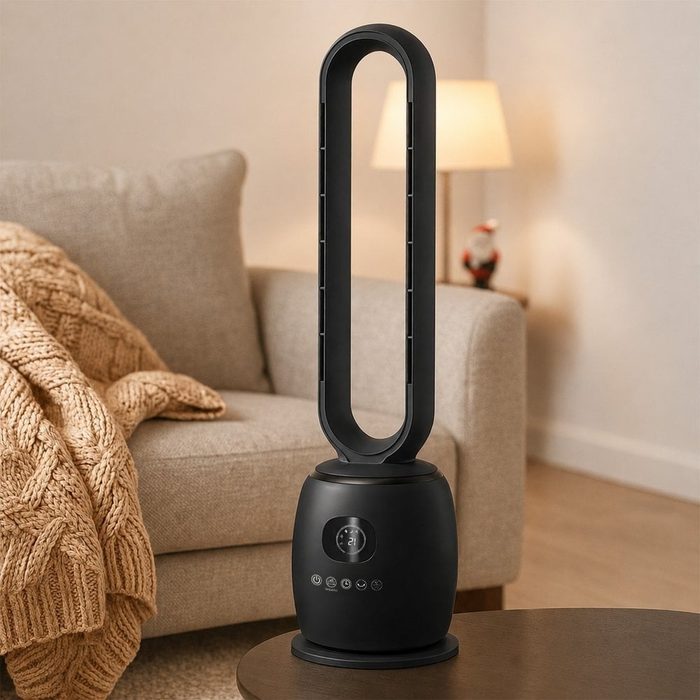
Oil-Filled Radiators: Sustained, Energy-Efficient Heat
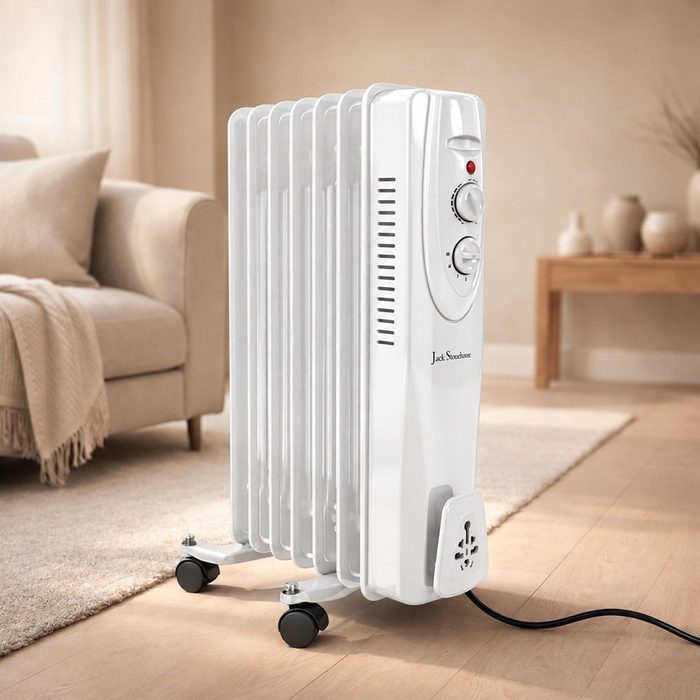
An oil-filled heater electrically heats the diathermic oil inside it, after which the oil flows through metal fins to give off heat all over the room. The fact that the warm oil stays hot for a long time after the power has been switched off means that an oil-filled radiator gives out gentle, silent, and continuous heat. It is therefore the best choice for heating bedrooms, living rooms, and areas that are used for long periods during the day when quiet and steady warmth are required.
An oil-filled heater contains an electric element that is immersed in a special diathermic oil which has a high thermal capacity. The oil is not burned and is not consumed; instead, it acts as a thermal store. When it is heated, the oil circulates freely throughout the welded steel fins and warms the outer surface of the metal, at the same time radiating an even mixture of radiant heat and natural convection currents.
Main Advantages
- Superior thermal inertia: Even after the thermostat switches the internal element off, the heated oil continues releasing warmth into the room for up to 40 minutes.
- Silent operation: Without motorised fans, an oil-filled radiator operates in near-total silence, interrupted solely by the occasional faint click of the thermostat.
- Gentler on indoor air: Unlike forced-air units, radiators do not circulate dust or dry out the mucous membranes in your nose and throat, preserving a pleasant indoor air balance.
- Reduce long-term cycle costs: Built-in precision thermostats allow the appliance to cycle on and off automatically, drawing mains power for only a fraction of each operating hour.
Considerations and Limitations
Because oil-filled radiators have a great deal of thermal mass, it takes from 15 to 25 minutes for them to get up to their full operating temperature. They are heavier than fan-assisted ones (the weight generally lying between 7 kg and 12 kg), even though they have built-in castor wheels and a handle, which makes it easy to move them from one room to another.
Best Used For
- Heating should be continued in the bedrooms and lounges for a period of between 3 and 8 hours.
- Setting the background temperature to be regulated in rooms which are poorly insulated overnight.
- The machine should operate completely silently and in a way that does not draw attention.
Fan Heaters vs Oil-Filled Heaters: Head-to-Head Comparison
If you are looking for fast and short-term warming in a small area, such as warming your feet at a desk or quickly getting rid of the cold in a bathroom, then you should choose an electric fan heater.
If you need quiet and continuous heating for several hours in a medium or large bedroom or living room, an oil-filled heater is the better option. Unlike fan heaters, which can heat a room immediately, oil-filled radiators are better at retaining heat and use less energy over time.
To help you decide which system best corresponds with your living habits, review this side-by-side feature comparison:
| Feature / Metric | Electric Fan Heater | Oil-Filled Radiator |
| Warm-Up Speed | Instantaneous (10 to 30 seconds) | Gradual (15 to 25 minutes) |
| Heat Retention | Minimal (drops immediately upon switch-off) | High (emits warmth 30+ mins after switch-off) |
| Noise Level | Moderate fan hum (approx. 45 to 55 dB) | Virtually silent (0 to 10 dB) |
| Primary Heat Type | Forced convection | Radiant heat plus natural convection |
| Portability | Very high (typically under 2 kg) | Moderate (7 to 12 kg, supported by castors) |
| Air Quality Impact | Can disturb household dust; lowers humidity | Gentle on air moisture; does not circulate dust |
| Ideal Room Size | Up to 12 to 15 m² | Up to 20 to 25 m² |
| Best Usage Window | 15 minutes to 2 hours | 2 hours to 8+ hours |
What Does Indoor Heating Cost? Calculating Running Costs.
The cost of running a heater is obtained by multiplying its wattage by the price of electricity for domestic use. For example, with a 2,000W (2kW) heater running continuously at the average UK electricity rate of 26p per kilowatt-hour, the cost will be 52p per hour. However, since thermostatically controlled oil radiators switch the power on and off in order to maintain a constant room temperature, their actual consumption in real-life situations is generally 30% to 50% lower than the amount indicated by the continuous rating.
To budget accurately for your indoor heating, use this straightforward formula:
Hourly Cost = (Heater Rating in Watts / 1,000) × Electricity Cost per kWh
The following table gives the hourly running costs for typical heat settings on the basis of taking the average electricity rate under standard domestic tariffs as 26 pence per kWh.
| Power Setting | Continuous Power Draw | Cost per Full Hour (Continuous) | Estimated Real-World Cost (Thermostatic Cycling)* |
| Low (750W) | 0.75 kWh | 19.5p | 11.5p to 14.0p |
| Medium (1,500W) | 1.50 kWh | 39.0p | 23.0p to 28.0p |
| High (2,000W) | 2.00 kWh | 52.0p | 31.0p to 38.0p |
| Maximum (2,500W) | 2.50 kWh | 65.0p | 39.0p to 47.0p |
It should be noted that in the real world a unit fitted with an active thermostat will be switching on approximately 60 per cent of the time as soon as the desired ambient room temperature has been achieved in an insulated space.
Helpful Tips to Optimise Efficiency
- Install multi-heat switches: When you are choosing a heater, make sure it has variable wattage settings, and after the room has reached a comfortable temperature, lower the setting from 2,000W to either the 750W or 1,000W maintenance level.
- Be sure to close the internal doors so that the heat remains in the part of the building that you are using and the thermostat on your heater does not have to work too hard against the cold drafts in the corridors.
- Set your radiator to switch on 30 minutes before you get out of bed or when you come back from work by means of a 24-hour timer so that you won’t be tempted to use the appliances on maximum power.
Safety Guidelines for Portable Domestic Heaters
Modern portable heating units incorporate strict safety certifications (including UKCA and CE marks), but safe positioning is necessary:
- Maintain clearance: Keep at least 1 metre (3 feet) of clear space around the perimeter of any heater, away from curtains, upholstery, and bedding.
- Plug directly into the mains: Avoid connecting high-draw heating appliances to thin extension leads, which can overheat under continuous electrical resistance.
- Look for automatic safety cut-outs: Always check that your chosen model features an automatic tip-over switch (which shuts the unit down if knocked over by children or pets) and thermal overheat protection.
- Never dry laundry directly on heaters: Covering an oil-filled heater or fan grille blocks ventilation channels, resulting in rapid component overheating and a significant fire hazard.
Frequently Asked Questions (FAQs)
Is it cheaper to run an oil-filled heater or an electric fan heater?
When heating is only required for short periods of less than an hour, an electric fan heater is generally the cheaper option since it provides heat immediately and does not waste energy by heating an internal fluid. If the heating is to last for more than two hours, the oil-filled heater is the more economical choice because of its thermal mass, which retains the heat and keeps releasing it even after the thermostat has switched off the electrical power.
Can I safely leave an oil-filled heater on overnight?
Certainly, but only in the case where the heater has built-in overheat protection, a tilt switch, and either a mechanical or a digital thermostat; you should set the thermostat to a moderate background temperature (such as 17°C to 19°C) and place the radiator on a level, unobstructed floor surface, keeping it away from blankets or curtains. Electric fan heaters should not be left unattended when you are sleeping because of the noise, the circulation of dust, and the concentrated emission of hot air.
Does an indoor fan heater dry out the air?
Electric fan heaters do not directly take moisture out of the air since warming cold air rapidly reduces its relative humidity. The forced air currents cause the natural moisture from your eyes, skin, and respiratory passages to evaporate more quickly, and this can result in a sensation of dry, itchy air after extended use.
What size heater do I need for a 15 square metre room?
In a house that is normally well insulated, a room of ordinary size—15 m² with a typical ceiling height of 2.4 m—requires approximately 1,500W (1.5 kW) of heating power, and a fan heater having a power output of 1.5 kW to 2 kW or an oil-filled radiator with between 7 and 9 fins can raise the room to a comfortable temperature without the need to run at full power continuously.
Finding Your Heating Solution with Jack Stonehouse
Selecting the ideal indoor heating setup comes down to your daily requirements:
- Choose a lightweight electric fan heater if you want instant warmth, easy room-to-room portability, or focused desk comfort during brisk mornings.
- Choose an oil-filled heater if you need quiet, steady, ambient warmth for several continuous hours in living rooms, nurseries, or bedrooms.
Combine zone heating with a simple timer so that your home stays warm and welcoming throughout the winter months while at the same time keeping your energy bills low.
If you’re ready to improve your home comfort, take a look at our full range of energy-efficient indoor heaters, which have been designed to provide reliable heat, ensure functional safety, and deliver excellent performance.
Read Next
How to Use a Portable Heater: The Ultimate Safety and Efficiency Guide
How to Choose the Perfect Radiator Cover
Why Should I Buy an Oil-Filled Radiator?
Comments are closed here.