
What Size Bike Do I Need? The Complete Frame Sizing Guide
Riding a bike that doesn’t fit is both uncomfortable and extremely inefficient. Whether you’re commuting to work, taking a weekend ride on the trails, or just putting in some miles, a properly fitted bike helps prevent injury and, of course, gives you much more enjoyment in the saddle. If you’re in the market for a new bike and are somewhat baffled by all the different measurements and geometry charts out there, you’re not the only one.
This complete guide will show you how to take your body measurements, read standard size charts, and find the right fit for your riding style.
Summary
- Measurements matter: Your height and your inside leg measurement (inseam) are the two most accurate indicators of your ideal bike frame size.
- Different disciplines, different sizes: Mountain bikes, gravel bikes, and hybrid bikes use slightly different sizing conventions (inches versus centimetres).
- In-between sizes: If you fall between two frame sizes, sizing up gives a more stable ride, while sizing down offers a nimbler, more responsive experience.
- Brand variations: Always check the manufacturer’s size chart before purchasing, as frame geometry varies greatly between brands.
Content
How to Measure Yourself for a Bike Frame
To measure yourself for a bike, you need your exact height and your inside leg measurement. Stand barefoot against a wall, place a book between your legs so it sits right up against your pelvis, and measure from the top of the book to the floor. That inside leg measurement is the standover height you need.
Knowing your exact dimensions is far more reliable than trying to work it out from your trouser size. Here’s the best way to get an accurate measurement at home:
- Remove your shoes: Stand flat on the floor against a blank wall.
- Find your true height: Stand straight, place a flat object (like a ruler or a book) on top of your head, mark the wall with a pencil, and measure the distance to the floor.
- Measure your inside leg: Place a hardcover book between your legs as high as is comfortably possible. This imitates the pressure of a bike saddle.
- Record the drop: Have a friend measure from the top edge of the book straight down to the floor. Record this measurement in both inches and centimetres.
What Size Bike Do I Need? Standard Sizing
To get the right bike size, you’re matching your height to the correct manufacturer frame size. For most adults in the 5’6″ to 5’10” range, a medium frame (usually 17 to 18 inches) is the way to go. Sizing guidelines do vary, though, depending on whether you’re looking at a mountain bike, road bike, or a hybrid bike.
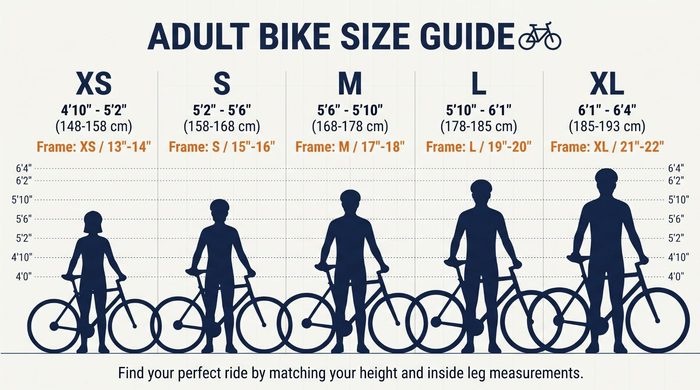
To give you a baseline, here’s a general adult sizing guide based on rider height. Again, this is just a starting point, and you should always refer to the specific bike brand’s geometry chart.
General Adult Frame Size Guide:
- 4’10” to 5’2″ (148cm to 158cm): Extra Small (XS) / 13 to 14 inches
- 5’2″ to 5’6″ (158cm to 168cm): Small (S) / 15 to 16 inches
- 5’6″ to 5’10” (168cm to 178cm): Medium (M) / 17 to 18 inches
- 5’10” to 6’1″ (178cm to 185cm): Large (L) / 19 to 20 inches
- 6’1″ to 6’4″ (185cm to 193cm): Extra Large (XL) / 21 to 22 inches
What Size Mountain Bike Do I Need?
If you’re asking “what size mountain bike do I need?” then you should be looking at standover and frame reach. Mountain bike frames are traditionally sized in inches. A 5’9″ rider would generally be looking at a medium frame of around 17 to 18 inches, which will give you plenty of standover and clearance for all the rough and ready terrain.
Mountain bikes have a sloping top tube, which gives the rider loads of clearance when they need to hop off the saddle. Your inside leg measurement is therefore very important, and you need at least two inches of clearance between your body and the top tube when you’re standing flat on the ground.
When choosing your mountain bike, also consider your riding style:
- Cross-Country (XC): Riders often prefer a slightly larger frame to stretch out for efficient pedalling power.
- Downhill and Enduro: Riders generally prefer a smaller, more compact frame to throw the bike around in tight corners and over steep descents.
Sizing for Road Bikes and Hybrids
Mountain bikes are measured in inches, whereas gravel bikes are measured in centimetres (52cm, 54cm, 56cm, etc.). Getting the frame size right is critical for off-road drop-bar riding, as you want a balanced, slightly stretched-out position that gives you control on loose ground without straining your back or neck. If you’re going to be doing some real off-road stuff, you need a lot of standover clearance so you can easily hop off when the going gets rough.
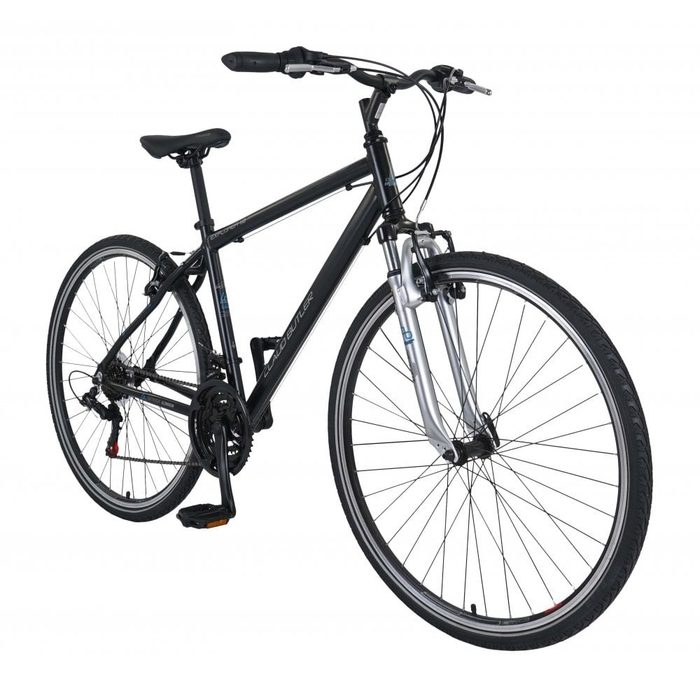
Hybrids (bikes that mix the relaxed geometry of a mountain bike with the smooth tyres of a road bike) generally stick to the old ‘small, medium, large’ sizing. They’re designed for upright commuting and general pleasure riding, so you don’t need the millimetre precision that you do on a road bike where you’re racing.
Frequently Asked Questions (FAQs)
What if I ride a bike that is too big?
Riding an oversized bike leads to overreaching, which can cause lower back pain, neck pain, and poor handling. You’ll also find it very difficult to get your feet planted when you need to stop suddenly, which is a major safety issue.
Should I size up or down if I’m precisely between two sizes?
If your height falls between two sizes, then go for the smaller size for a more agile, quicker, nimble ride. Alternatively, choose the larger size if you prefer a stable, comfortable, more stretched-out riding position over longer distances.
Are women’s bike sizes different from men’s?
Yes, women’s bikes will invariably have narrower handlebars, a shorter reach and different saddle shapes to cater for the female anatomy. Many female riders, however, find that a standard unisex frame fits perfectly well once you’ve got the saddle height and stem length sorted.
Find Your Perfect Bike with Jack Stonehouse
Finding the right bike size doesn’t have to be daunting. Simply measure your height and your inside leg, then learn the different sizing of mountain, road, and hybrid bikes, and pick a frame that gives you maximum comfort and control.
Ready to put this to use? Take a look at our huge range of expertly built two-wheelers. Whether you’re going off-road or commuting around the city, browse our full range of adult bikes and essential helmets at Jack Stonehouse to find your ideal match today.
Read Next
Electric Bike vs. Regular Bike: Which One’s Right for You?
Electric Bikes in the UK: How They Work, What the Law Says & What to Expect
The Only Bike You’ll Ever Need? Why Hybrid Bikes Are Taking Over
Comments are closed here.