
How to Maintain Your Electric Bike Battery: The Complete UK Owner’s Guide
Your e-bike battery is the most expensive item on your bike and can be up to a third of the bike’s value. Whether you’re using it for a brisk weekday pedal-assist commute or taking it out for a leisurely Sunday ride along country lanes, how you use and look after it will determine whether that battery lasts many years or deteriorates after only a few years.
This guide is for existing e-bike owners and offers practical, science-based maintenance strategies that work in UK weather and riding conditions. You’ll learn how to get the most mileage from every charge, how to care for your cells in the damp UK winter, and how to know when it’s time to replace or upgrade.
Summary
- Stick to the 20-80% sweet spot: Keep your battery between 20 and 80% for day-to-day commuting, and save 100% charges for long weekend rides.
- Charge at room temperature: Don’t plug a cold battery straight in from a winter shed, as charging below 0°C can result in permanent internal cell damage.
- Store smartly over winter: If you’re just hanging your helmet up for a few weeks, then store the battery indoors at 40-60% charge and check it every six weeks.
- Know when to replace: If you have a permanent range drop of over 30% in mild conditions, sudden power cut-offs or physical damage to the casing, it’s time to replace it or upgrade to a modern e-bike.
Content
- How Daily Range and Long-Term Battery Lifespan Work Together
- Smart Charging Habits That Double Your Battery's Lifespan
- Seasonal Storage and British Weather Protection
- Riding Habits and Bike Maintenance That Reduce Power Drain
- Signs Your Battery Needs Replacing and the Best E-Bike Upgrades
- Frequently Asked Questions (FAQs)
- Getting the Most From Every Charge
How Daily Range and Long-Term Battery Lifespan Work Together
Most contemporary lithium-ion electric bike batteries last between 500 and 1,000 full charge cycles, which equals roughly three to five years of regular UK riding. On a single day, a standard 360Wh to 500Wh battery delivers 25 to 70 miles of pedal-assisted travel. Your daily mileage depends heavily on terrain, rider weight, headwinds, and chosen assistance level, whereas total battery life depends on heat management and charging discipline.
Understanding the difference between daily range and total battery life is key to riding smarter and avoiding range anxiety. If you’re asking how long an e-bike battery will last in a day, the honest answer is that it depends on your battery’s Wh rating and how hard you’re asking the motor to work.
A watt-hour rating is equivalent to the capacity of a fuel tank. A 36V 10Ah battery, for instance, has a capacity of 360Wh (36 x 10). Under normal British riding conditions, the e-bike typically uses between 7Wh and 12Wh per mile, depending on the level of assistance.
- Eco or Low Assist (Level 1): Consumes roughly 6Wh to 8Wh per mile, stretching a 360Wh battery to 45 to 60 miles in a single day.
- Tour or Normal Assist (Level 2 to 3): Consumes roughly 9Wh to 11Wh per mile, delivering 32 to 40 miles of comfortable mixed-terrain riding.
- Turbo or High Assist (Level 4 to 5): Consumes 13Wh to 16Wh per mile on steep hills and in strong headwinds, with daily range reduced to around 22 to 28 miles.
Why Charge Cycles Matter More Than Calendar Age
Every Lithium-ion pack suffers from two forms of wear: calendar ageing (slow chemical degradation over time) and cyclic ageing (wear from charge and discharge cycles). According to Bosch eBike Systems’ engineering specs, a good-quality e-bike battery is designed to retain about 80% of its original capacity after 1,000 full charge cycles.
A “cycle” doesn’t mean just plugging your bike in once. If you use 50% of your battery on Tuesday, recharge it and then use another 50% on Wednesday, that’s one full cycle. The shallower the discharge (the less you drain the pack), the more miles your battery will deliver over its lifetime.
| Daily Discharge Habit | Estimated Cycles to 80% Capacity | Real-World Lifespan (3 Rides/Week) | Stress on Lithium-Ion Cells |
| 100% down to 0% (Full Drain) | 400 to 500 cycles | 2.5 to 3 years | High (accelerates voltage stress) |
| 80% down to 20% (Optimal Daily Zone) | 1,000 to 1,500 cycles | 5 to 7+ years | Low (minimal heat and internal resistance) |
| 80% down to 40% (Short Commutes) | 1,800+ cycles | 6 to 8 years (limited by calendar age) | Very Low (ideal for daily top-ups) |
Smart Charging Habits That Double Your Battery’s Lifespan
To get the most out of your e-bike battery, keep the daily charge between 20 and 80% if you can, and only top it up to 100% before a long ride. Always use the manufacturer’s original charger in a dry, room-temperature environment, and unplug the pack as soon as it’s fully charged. Avoiding deep discharges and prolonged high voltage really does go a long way toward minimising the chemical wear inside the lithium-ion cells.
Lithium-ion cells are a bit like an elastic band. If you keep them either fully stretched at 100% or fully collapsed at 0%, you’re putting the maximum strain on the internal chemistry. Research from Battery University shows that simply reducing the peak charge voltage can double the cycle life of lithium-ion cells compared with charging to 100% every night.
Step-by-Step Routine for Safe Everyday Charging
Follow this simple five-step routine every time you bring your battery indoors to charge:
- Allow a 20-minute cool-down: After a hard hill climb or a warm summer ride, let the battery settle at room temperature before plugging it in.
- Connect the charger to the battery first (barrel or magnetic connector firmly into the battery’s charging port) before switching on the UK three-pin mains socket to prevent electrical arcing.
- Charge on a hard, non-flammable surface (a tiled kitchen floor, stone worktop or garage bench, etc.) and keep it well away from curtains, carpets, and direct sunlight. Do not cover the charger, as it needs airflow to cool.
- Unplug shortly after the green light comes on: The modern smart charger will cut power once the battery is full, but leaving it plugged in for days keeps the cells unnecessarily at full voltage.
- Do a monthly cell-balancing top-up: Every 4 to 6 weeks, charge the battery to 100% and leave it on for an extra 30 minutes. This gives the internal BMS (Battery Management System) time to balance the voltage evenly across all the individual cells.
Safety Warning: Don’t use any cheap, unbranded third-party chargers. If the voltage is wrong or there’s no thermal cut-off sensor, the cells can overheat and cause a fire. Always use the official charger that came with your bike.
Seasonal Storage and British Weather Protection
Store your e-bike battery indoors at a stable room temperature (10°C to 20°C), ideally at 40 to 60% charge when it’s not in use. Don’t charge a battery straight from a freezing winter shed, as that can cause permanent lithium plating. Just wipe the terminals dry after a wet ride in the UK and check the pack every six weeks during winter storage.
British weather is a real problem for e-bike owners because it’s damp year-round and freezes at night from November through March. Quality e-bike batteries are designed to be splash-proof for your commute; they’re not designed to sit in a damp, unheated garden shed for long.
Winter Storage Protocol (When You Are Riding Less)
If it’s wet roads or dark evenings that mean your bike is going to be parked for more than three weeks, then stick to these winter rules:
- Bring the battery in: Unlock and remove the battery pack from the frame and store it in a dry cupboard or hallway at 10°C to 20°C.
- Set the storage charge to 40 to 60% (two or three illuminated bars on your display indicator are ideal). Storing at 0% puts the battery into deep-discharge sleep mode, which the BMS will then lock the pack into permanently.
- Set a six-week calendar reminder to check the indicator lights. If the charge is below 30%, then plug it in for 30 to 45 minutes to get it back into the middle zone.
- Warm up before winter riding: On frosty mornings, fit your warm indoor battery onto the bike just before you set off. Cold lithium electrolytes are sluggish and can temporarily reduce your range by 20 to 30% until the pack warms up during the ride.
Protecting Terminals From Rain and Road Grit
After riding through puddles or salted winter roads, switch the bike off, remove the battery, and wipe the outer casing down with a slightly damp cloth. Don’t use a pressure washer or a hose near the battery mount or motor housing, as high pressure can force water past the rubber seals. Apply a very small amount of dielectric grease to the metal contact pins twice a year to prevent corrosion and ensure clean power delivery.
Riding Habits and Bike Maintenance That Reduce Power Drain
You can get up to 25% more daily mileage and reduce battery wear by keeping your tyres at the correct PSI, downshifting into a lower mechanical gear before stopping, and maintaining a smooth pedal cadence of 70 to 90 RPM. Save your high-power turbo modes for steep climbs only, as this prevents excessive heat build-up and reduces the total number of charge cycles you’ll have over the year.
Your bike mechanics will have a massive bearing on how much the battery has to work. The Energy Saving Trust’s UK e-bike guide makes this clear: regular servicing and good riding practice keep energy consumption extremely low, with a full charge costing just a few pence.
Four Quick Mechanical Wins for Better Efficiency
- Check your tyre pressure every two weeks: Under-inflated tyres create a lot of rolling resistance on tarmac and on canal towpaths. Getting your hybrid tyres up to their sidewall-recommended pressure (usually 50 to 65 PSI) will make a massive difference to motor draw.
- Use your gears as you would in a manual car: If you’re sitting at a traffic light in a high gear, the motor will draw a massive amperage from the battery. Shift down into an easy gear before stopping, then spin your legs smoothly at 70 to 90 RPM as you go.
- Clean and lubricate your chain. A dry, rusty chain wastes mechanical energy that your battery then has to make up for. Just wipe it down and apply a good-quality wet or dry cycle lube every 100 miles.
- Check for brake rub: Spin both wheels off the ground once a month. If a disc brake pad is dragging on the rotor, then your motor is fighting friction every mile.
Signs Your Battery Needs Replacing and the Best E-Bike Upgrades
Replace your e-bike battery or upgrade your ride if, in mild conditions, the range drops permanently by more than 30%, the pack suddenly shuts off under load, or the casing is swollen, cracked or has water ingress. Always dispose of worn lithium-ion packs at a certified UK recycling centre, and when replacing, choose a manufacturer-matched battery or go for a modern e-bike.
Even with the most careful attention, every battery will eventually reach the end of its chemical life. Before you spend any money, rule out the obvious temporary causes: a sluggish battery on a 2°C January morning or a bike with soft tyres will all come back to life when the weather improves. If, however, you’re seeing any of the following on a mild 15°C day, then your battery is genuinely at the end of its life:
- Sudden power cut-outs on the hills: The display shows two bars of charge and the motor just cuts out as soon as you start going up a hill (that’s the old cell voltage sag in a nutshell).
- Rapid charging times: The battery that used to take five hours to charge is now at 100% in 90 minutes, which suggests it can’t hold any real capacity anymore.
- Physical swelling, cracks or a chemical smell: Stop using the battery straight away. Store it outside, away from buildings, in a fire-safe container, and take it to your local household waste recycling centre’s battery disposal point.
Should You Buy a Replacement Battery or Upgrade Your E-Bike?
If your e-bike is less than three years old and the manufacturer still has the exact OEM battery pack in stock, then a genuine replacement battery is a very straightforward solution. If your bike is four years old or more, however, an OEM battery will cost £350 to £600, and you’ll likely find that your older motor controllers, displays, and drivetrains will need expensive work in due course as well.
In many cases, a new, fully warranted electric bike will be far more cost-effective in the long term, with fresher Li-ion cells and considerably better range per charge. If you’re in the market for a decent, reliable new bike, then take a look at the Jack Stonehouse range of electric bikes, which are all from good, established British heritage brands that have been built for the UK roads and trails.
| Recommended Model | Best Suited For | Standout Battery & Ride Features |
| Dawes Scenic Low Step Electric Hybrid Bike | Daily commuters and leisure riders seeking effortless mounting | Removable integrated battery for easy indoor charging, upright comfort geometry, and commuter-ready mudguards and rack. |
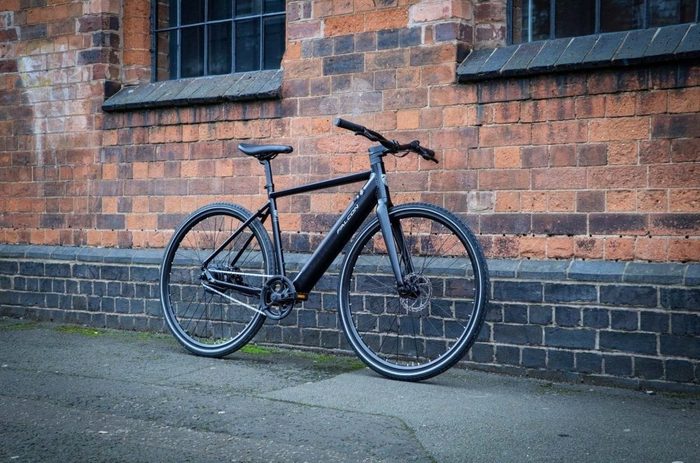
| Falcon Horizon Electric Hybrid Bike | Mixed-surface town and country path riders | Available in Low Step or Cross Bar frames, offering smooth pedal assistance and dependable all-weather braking. |
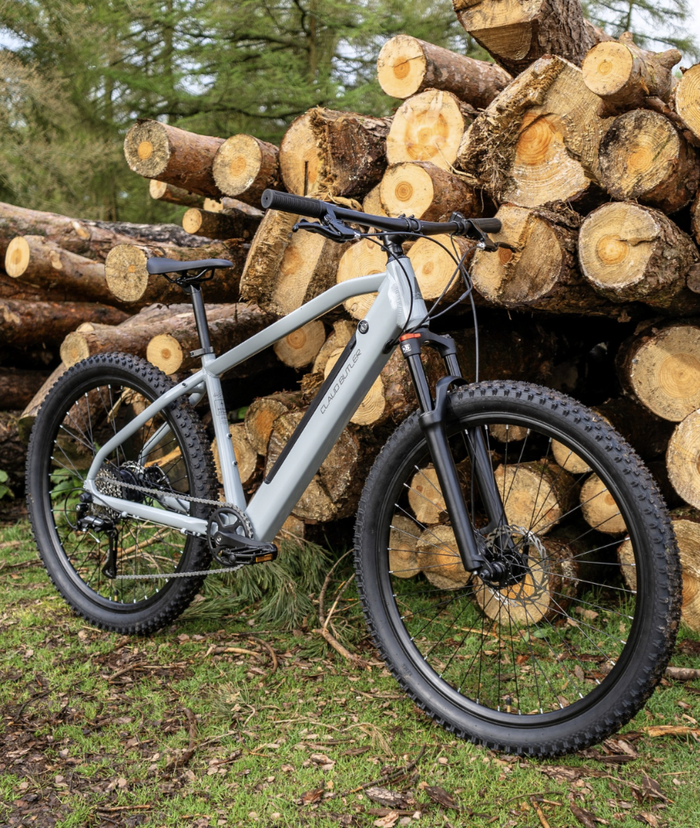
| Claud Butler Ridge 1.0 Electric Mountain Bike | Trail riders, gravel paths, and steep rural hills | High-torque motor pairing, front suspension fork, and rugged frame design built to handle demanding climbs. |
| Falcon Compact Electric Folding Bike | Train commuters, motorhome owners, and flat dwellers | Folds down neatly for indoor hallway storage, keeping both bike and battery safe from outdoor cold and damp. |
Frequently Asked Questions (FAQs)
Should I leave my e-bike battery plugged in overnight?
No, unplug your e-bike battery within an hour or two after it reaches a full charge. Even good-quality chargers have an automatic cut-off, but leaving the battery plugged in overnight keeps the cells at full voltage and generates excess heat, which gradually reduces long-term capacity. Remember: don’t leave batteries charging unattended!
Is it bad to ride an e-bike all the way down to a dead battery?
Yes, repeatedly draining your battery to 0% puts significant stress on the lithium-ion cells and accelerates capacity loss. Most e-bike Battery Control Systems have a small hidden buffer to prevent the cells from collapsing, but you should aim to recharge once your display hits 20% (i.e., one bar left).
Can I ride my e-bike in heavy British rain?
Yes, electric bikes and their removable battery packs are designed to be weather-resistant for riding in rain and wet conditions. They are not waterproof, though, and are not designed to be submerged or jet-washed. Always dry the battery casing and the frame contacts with a towel after a wet ride, and never leave your e-bike parked outside overnight in the rain.
How much does it cost to charge an electric bike battery in the UK?
Charging a standard 360Wh to 500Wh e-bike battery from empty to full will cost you approximately 9p to 15p on a typical UK domestic electricity tariff. Even if you’re commuting 5 days a week all year round, your annual electricity bill will be under £35. So an e-bike is one of the most cost-effective ways of getting around.
Getting the Most From Every Charge
Looking after your electric bike battery does not require complicated tools or technical expertise. By charging indoors at room temperature, keeping daily levels between 20% and 80%, storing your pack at half-charge through winter, and keeping your tyres properly inflated, you can easily add years of reliable mileage to your ride.
If your current battery struggles to hold a charge or no longer covers your daily commute, it might be time for a fresh start. Browse the full range of electric bikes from leading brands such as Dawes, Falcon, and Claud Butler at Jack Stonehouse today to find a reliable, UK-road-legal e-bike ready for your next journey.
Read Next
Electric Bike vs Regular Bike: Which One’s Right for You?
Electric Bikes in the UK: How They Work, What the Law Says & What to Expect
The Only Bike You’ll Ever Need? Why Hybrid Bikes Are Taking Over
Comments are closed here.