
Why should I buy an oil-filled radiator?
Despite winter edging its way into spring, we’d be fools to believe we’ve seen the last of the cold weather, not least with cold snaps plunging temperatures way below zero every few weeks. Alongside cold nights in, the post-lockdown world has seen a significant rise in cold working days at home too, with many of us able to see our breath whilst working away in our home office spaces.
The combination of home-working and unpredictable weather means that it’s important to consider how to keep warm efficiently and economically during winter. Finding the right type of heater helps you do this, keeping you warm and cosy without adding too much to your bills.
To find out more about why an oil-filled radiator is the right choice for you read on: here’s everything you need to know about how they work – and why you should buy one.
Table of contents:
- How do oil-filled radiators work?
- Do oil-filled radiators give off a lot of heat?
- Do oil-filled radiators use a lot of electricity?
- Are oil-filled radiators safe?
- What are the disadvantages of oil-filled radiators?
How do oil-filled radiators work?
Portable oil heaters use diathermic oil to warm an electric element, which transfers heat to the surrounding metal columns and cavities through convection. This process spreads heat evenly throughout the heater, and the oil retains the heat it generates for a long time.
By retaining the heat, the oil keeps the heater warm for a good while after it’s been switched off, and the heaters that use it come pre-filled, meaning you don’t need to buy oil separately.
Do oil-filled radiators give off a lot of heat?
Due to the oil’s capacity for heat retention, oil-filled radiators can give off a significant amount of heat, though they don’t hit temperatures that are hot enough to burn, unlike traditional central heating radiators.
This makes them a comfortable and effective portable heating option, as they are designed to avoid excessive heat generation whilst maintaining their temperature efficiently. Alongside even heat production, this feature contributes to the overall consistency and reliability associated with oil-filled heaters.
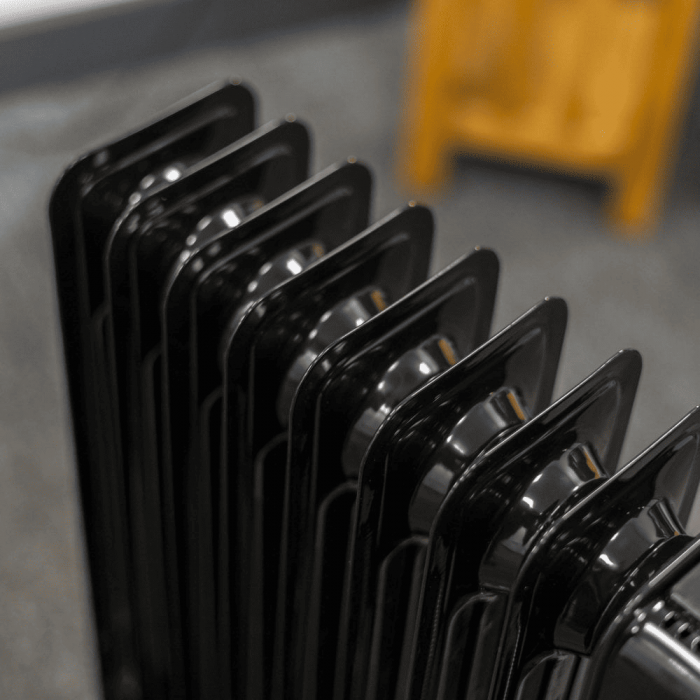
Because of this, they are more suited to regular, day-to-day use, especially over periods of several hours or more, as their capacity to retain and evenly distribute heat stays more constant than other types of heaters. This consistency means oil-filled radiators are ideal for those who don’t work at the office, and can help cut heating costs whilst keeping you warm whilst working from home.
Do oil-filled radiators use a lot of electricity?
If used correctly, oil-filled heaters are very economical. That said, there are a few things to keep in mind when considering how cost-effective they are.
In large rooms or rooms with poor insulation, trying to maintain a reasonable temperature can be quite difficult with a portable heater, regardless of whether the heater is halogen, oil-filled or gas.
Whilst oil-filled heaters are generally more efficient than other portable heaters, it is still important to choose one that is the right size for the room or rooms you want to heat.
Like any type of domestic application, your electricity costs will ultimately determine how expensive running a portable, oil-filled radiator is, meaning a little research into wattage and other details will give you a better idea before buying.
Are oil-filled radiators safe?
Whilst oil-filled heaters are generally considered safe, there are a few things you can do to make sure they stay that way.
Whilst they maintain a steady temperature and don’t tend to overheat, it is still advisable to stand your radiator a few feet away from walls and perishable household items so they don’t cause any lasting damage.
As well as this, try not to leave a portable oil-filled heater unattended for long periods of time, and always keep an eye out for any faults or types of damage, especially anything on the plug itself or the cable that connects it to the wall.
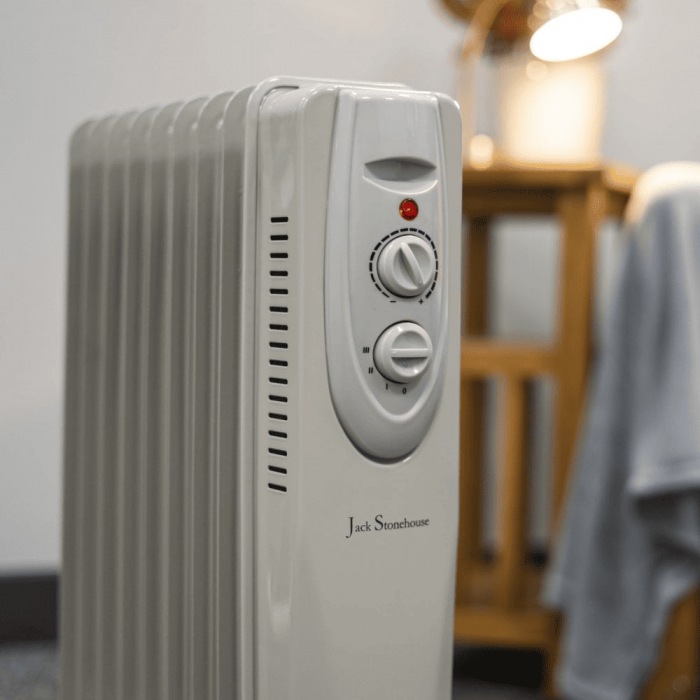
Many oil-filled radiators, including those at Jack Stonehouse, have important safety features built into them, such as overheat protection and a tip-over switch, which cuts off power should the unit fall over. This means they are generally safe to use and are suitable for busy home environments.
What are the disadvantages of an oil-filled radiator?
Compared to other electric heaters, oil-filled radiators take longer to initially heat up, and they are generally more expensive to buy. Whilst they are portable, they are heavier than other types of portable heaters and, therefore more difficult to move, which is worth taking into account.
These disadvantages are, however, outweighed by the advantages listed above, with their initial heating time counteracted by how long it takes for them to cool down and eventually stop emitting heat.
Whilst halogen and fan heaters are lighter and easy to move around, they are by no means as sturdy as oil-filled heaters, which are more robust and less vulnerable to damage if knocked or banged in transit.
Key Takeaways:
Benefits of an oil-filled radiator:
- Heat retention capabilities mean they are energy-efficient.
- Consistent and reliable source of heat.
- Safe and robust.
Because of their capacity to retain heat, oil-filled radiators are consistent, reliable and energy-efficient, often designed with built-in safety features. If you’re looking for a portable heater, you’d be hard-pressed to find a better option.
At Jack Stonehouse, we have a range of portable oil-filled radiators to keep you toasty without having to heat the whole house with costly central heating.
Heating at Jack Stonehouse
Find money-saving oil-filled heaters and more in our range of heaters at Jack Stonehouse. Portable heaters aren’t the only cost-effective way to stay comfortable this winter. Our collection of heatable gifts can be the perfect way to keep you toasty during these bitterly cold evenings.
Choose Jack Stonehouse for your winter warming needs and save yourself from harsh temperatures and costly bills.
Related posts
Comments are closed here.