
The Ultimate Guide to Attracting Garden Birds: Top Tips for a Wildlife Haven
| Key Takeaways Seasonal Feeding: Feed high-energy fats in winter and high-protein in spring. Small birds can lose up to 10% of their body weight on a single cold night, making winter feeding vital. Safety First: Place feeders roughly 2 metres away from thick cover. This is close enough for birds to dart away from predators, but far enough to stop cats from pouncing. Hygiene is Non-Negotiable: Clean feeders weekly to prevent the spread of diseases like Trichomonosis, which has caused a decline in UK Greenfinch populations. Tech for the Family: Use a Smart Bird Feeder with Camera to see the birds up close and get kids interested in local wildlife without the screen-time guilt. Get Counting: Participate in the Big Garden Birdwatch to contribute to the world’s largest garden wildlife survey. |
At Jack Stonehouse, we know that a house doesn’t truly feel like a home until the garden is full of life. There is something incredibly peaceful about watching a Blue Tit flit through the trees or hearing the morning song of a Robin while you enjoy your first coffee of the day.
Whether you have a sprawling garden or a cosy patio, transforming your outdoor space into a sanctuary for wild birds is easier than you think. By following a few simple steps, you can create a safe, inviting environment that helps our feathered friends thrive all year round.
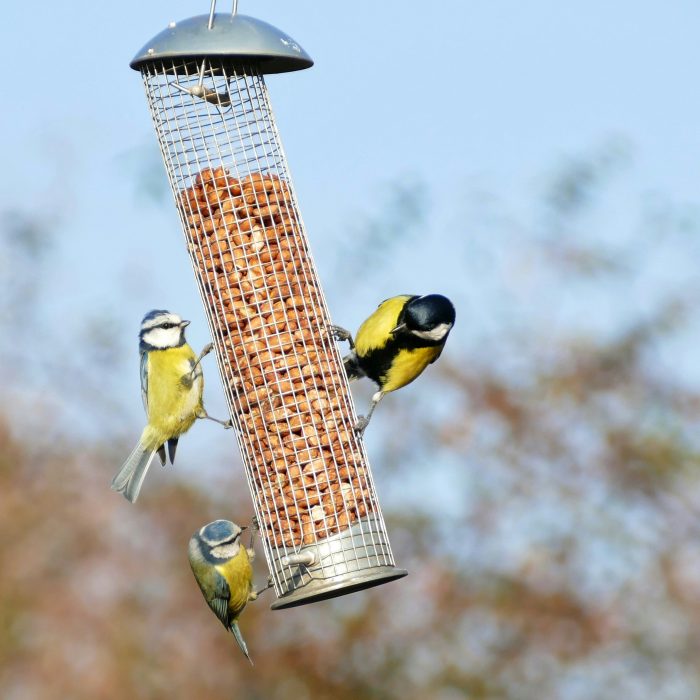
Contents
What to Feed Your Garden Birds
Feeding Through the Seasons: Fat vs. Protein
Match the Feeder to the Food
Where to Place Your Feeders
Hydration & Hygiene: Essential Bird Welfare
Deterring Unwanted Guests
Interact with Tech: The Smart Bird Feeder
Get Involved: The Big Garden Birdwatch
Bird Feeding FAQs
What to Feed Your Garden Birds
Just like us, birds need a balanced diet. However, their needs change with the seasons. During the cold winter months, they need high-energy fats to stay warm, while spring requires high-protein foods to help them raise healthy chicks.
To attract a wide variety of species, you need to offer a varied menu:
- Sunflower Hearts: These are the “gold standard” of bird food. They are loved by Blue Tits, Great Tits, House Sparrows, and Finches. Best of all, they are husk-free, meaning less mess.
- What to feed a bird from your kitchen: You don’t always need to head to the shops. Small amounts of mild grated cheese, bruised apples, and even leftover plain jacket potatoes can be a real treat for birds like Blackbirds and Robins.
- Suit the Species: To see specific birds, you need to cater to their unique dining habits.
| Bird Species | Preferred Food | Feeding Habit |
|---|---|---|
| Blue Tits & Great Tits | Seeds, suet, and peanuts | Hanging feeders |
| Robins & Pied Wagtails | Mealworms (a top favourite!) | Ground or table |
| Finches (Goldfinches/Siskins) | Nyjer seeds or sunflower hearts | Hanging feeders |
| Blackbirds | Suet pellets, mealworms, and fruit | Ground |
| House Sparrows & Doves | Small seeds and grains | Ground or table |
Feeding Through the Seasons: Fat vs. Protein
To truly support your local wildlife, you should adjust your routine based on the weather. A bird’s nutritional requirements shift dramatically throughout the year.
Autumn & Winter: Energy Foods
During the cold winter months, birds have a very high metabolic rate and need high-energy fats just to stay warm overnight.
- What to offer: Suet balls, fat bars, and peanuts (in mesh feeders).
- Routine: In severe weather, try to feed twice daily: once in the morning and once in the early afternoon.
Spring & Summer: The Nesting Season
In the spring, the focus shifts to high-protein foods. This is essential for helping birds through their moulting season and providing the building blocks for them to raise healthy, strong chicks.
- What to offer: Mealworms and high-quality seed mixes.
- Safety Warning: Be careful with home-made fat balls in summer, as they can melt and coat feathers. Also, ensure peanuts are only in rigid-mesh feeders; whole nuts are a major choking hazard for chicks fed by their parents.
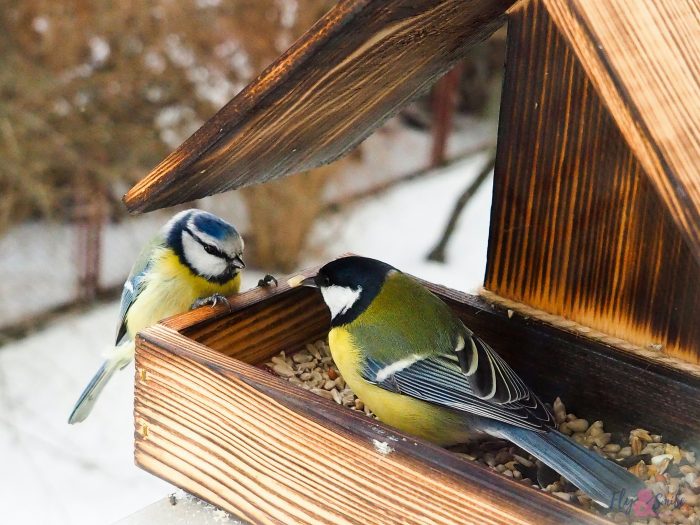
Match the Feeder to the Food
- Nut Feeders: Only use feeders made of rigid steel mesh. This is the only safe way to offer nuts, as it prevents birds (especially chicks) from taking large chunks that could cause choking.
- Seed Feeders: Designed for sunflower seeds and high-quality mixes. Look for designs that drain easily; you don’t want old food sitting in damp corners.
- Ground Feeding: Many species, like Blackbirds and House Sparrows, prefer to forage on the ground or a low bird table.
Pro-Tip: Avoid “filler” foods. Cheap birdseeds often include dried peas, beans, or wholewheat that most garden birds won’t eat. Stick to high-quality hearts and suet to ensure nothing goes to waste.
Where to Place Your Feeders
Positioning is everything. It can take a little time for birds to get used to a new feeder, so don’t be discouraged if they don’t visit immediately. Aim for a spot that is:
- Quiet & sheltered: Somewhere birds won’t be constantly disturbed by foot traffic or harsh winds.
- Safe from predators: Place feeders close enough to cover (like a bush) so birds can dart away if threatened, but not so close that a cat can hide inside and pounce.
- Visible: Make sure you have a clear line of sight from your window. Half the joy is being able to watch them from your armchair!
Hydration & Hygiene: Essential Bird Welfare
A source of fresh water is essential for drinking and bathing. A simple birdbath or shallow plant tray with sloped sides is perfect.
The Cleanliness Code
Bird hygiene is vital to prevent the spread of diseases like Trichomonosis.
- Daily: Rinse out water containers and clear off debris.
- Weekly: Deep-clean feeders with a mild disinfectant and a long-bristled brush. Always clean feeders outside and wear gloves.
- The “Sick Bird” Protocol: If you see a sick bird, stop feeding immediately. Store your feeders away for 2–4 weeks and thoroughly disinfect the area to stop the spread.
Deterring Unwanted Guests
Love the birds but not the uninvited visitors? It is a common challenge, but you don’t have to stop feeding your feathered friends to keep pests away.
- Discourage Rats: Rodents are usually attracted to the mess on the floor. Switch to “no-mess” seeds like sunflower hearts to prevent husks from piling up, and attach a seed catcher tray to your feeder. Only put out enough food to be finished by dusk, and consider adding a dash of chilli flakes to your mix. Birds can’t taste the heat, but rats find it incredibly off-putting.
- Outsmart Squirrels: Use a pole feeder to make it more difficult for squirrels to climb up and keep it away from anywhere that they can use as a launching pad.
- Keep Cats at Bay: Place your feeding station on a tall, smooth metal pole in an open area. This prevents cats from climbing or using nearby objects as a jumping-off point. You can also scatter citrus peel or spray citronella around the base of the feeder as a natural scent deterrent.
Interact with Tech: The Smart Bird Feeder
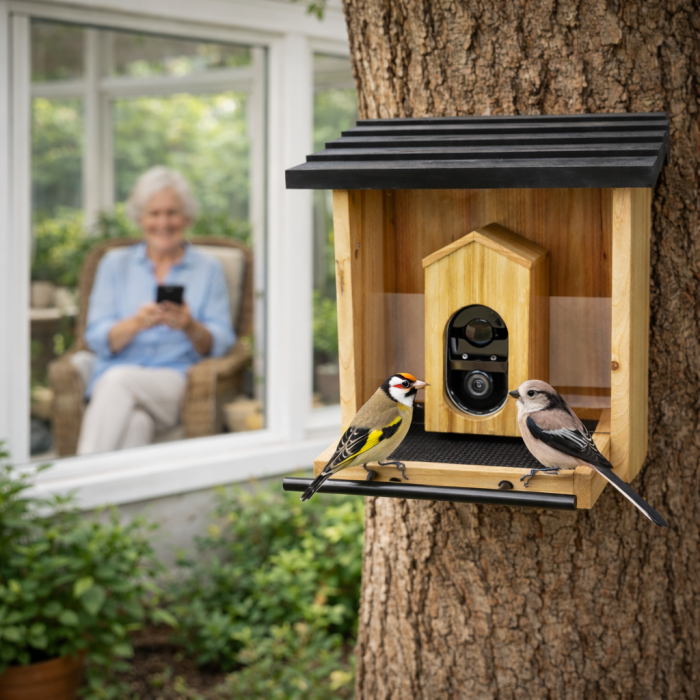
If you’re looking for a way to get the kids away from their screens and into the garden, it’s time to upgrade your setup.
Product Spotlight: The Jack Stonehouse Smart Bird Feeder with Camera
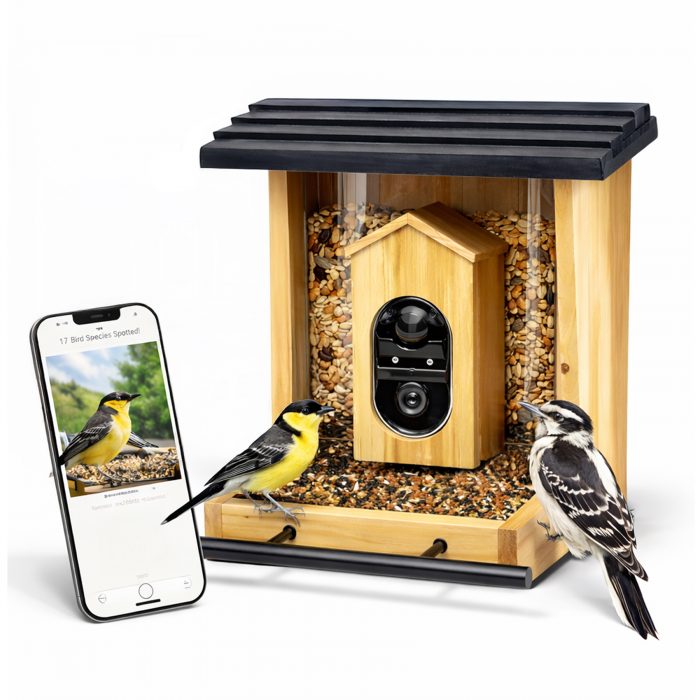
Why settle for a distant view when you can see every feather in high definition? Our Smart Bird Feeder with Camera is the ultimate hobbyist tool.
Get Involved: The Big Garden Birdwatch
Once you’ve set up your sanctuary, join the Big Garden Birdwatch. Spend an hour counting the visitors to your garden and report your findings to the RSPB. It’s a wonderful way to contribute to national conservation while enjoying the peaceful sanctuary you’ve built.
FAQs
What to feed a baby bird that fell?
The short answer is: Generally, nothing. It sounds counterintuitive, but feeding a baby bird can often do more harm than good. Baby birds have highly specific diets and can easily choke if fed incorrectly. Giving them bread or milk can be fatal.
- Identify it first:
Fledglings (have feathers): These birds are supposed to be on the ground! They are learning to fly. Their parents are likely nearby. Leave them alone unless they are in immediate danger from a cat.
Nestlings (bare skin or fluff): These are too young to be out. Try to find the nest and gently put them back. If you can’t find it, contact a local wildlife rescue or vet.
- If a rescue tells you to feed them (last resort): They may suggest moistened (soaked) cat or dog kibble (until spongy) or a bit of mashed hard-boiled egg. But never attempt this without speaking to an expert first.
What to feed an injured bird?
If you find an injured bird, their primary need is warmth, darkness, and quiet to recover from shock.
- Priority One: Place the bird in a cardboard box with air holes and a soft cloth at the bottom. Keep it in a quiet, dark room away from pets and children.
- Don’t Force Feed: An injured bird is often in shock or dehydrated. Forcing food or water into their beak can cause them to inhale the liquid into their lungs.
- Contact a Vet or Rehabilitator: In the UK, most vets will treat wild birds for free. You can also find your nearest specialist via the Help Wildlife map.
- Emergency Energy: If a professional asks you to provide energy while waiting for transport, they may suggest a tiny bit of sugar-water (1 part sugar to 4 parts water) on a cotton bud touched to the side of the beak—but only under their instruction.
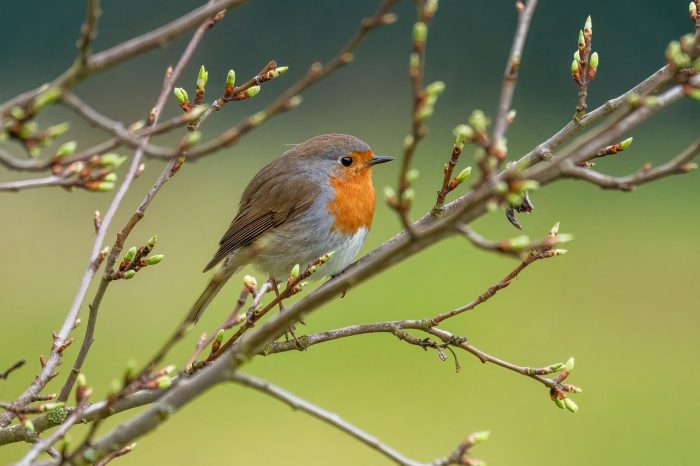
Transform Your Garden into a Bird Haven with Jack Stonehouse
Creating a garden that hums with life is one of the most rewarding ways to make your house feel like a home. By providing the right mix of high-energy foods, fresh water, and a safe environment, you aren’t just watching nature; you’re actively helping to protect it.
Whether you’re starting small with a simple seed tray or going all-in with our Smart Bird Feeder with Camera, every little effort counts toward building a thriving local ecosystem. Remember, the key to a successful bird sanctuary is consistency and cleanliness; keep those feeders topped up and sparkling clean, and your garden will soon be the most popular spot on the block.
Related
What to Look for in a Bird Feeder With Camera (Before You Buy)
Comments are closed here.