
How to Use a Portable Heater: The Ultimate Safety and Operation Guide
In the UK, if cold weather hits, central heating systems may cause household budgets to be used up by keeping empty hallways, spare bedrooms and rooms that are not being used warm.
Whether or not you are using a portable heater in a drafty room or simply relaxing in the lounge, making sure your setup is right will help stop your electricity bill from rising unexpectedly.
The guide below details the setup procedures, safety clearances, operating costs, and the correct method of heating a room so that you can get the most out of your portable heater.
Quick Takeaways
- Select the appropriate appliance to meet your heating needs: if you need long-lasting heat and continuous comfort, then get an oil-filled portable heater, but if you want quick and quiet ambient warming, choose a panel portable heater.
- Do not position the heater within one metre of walls, furniture, or fabrics and always plug it directly into a mains socket rather than using an extension cord.
- You can save energy by heating only the room in which you presently are and by lowering the thermostat setting for the central heating in order to greatly cut down on seasonal energy consumption.
- It is absolutely essential that safety is not compromised, that an active unit is never left unattended, that it is not used while you are asleep, and that the built-in tip-over switches and thermal cut-off sensors should be checked regularly.
Content
- Choosing the Right Portable Heater for Your Space
- Panel Portable Heaters: Slimline Design and Rapid Warmth
- Oil-Filled Radiators: Sustained, Silent Heat Retention
- How to Set Up and Operate a Portable Heater: Step-by-Step
- Zone Heating Strategy: Lowering Running Costs with Portable Heating
- Essential Safety Procedures and Clearances
- Frequently Asked Questions (FAQs)
- Maximising Heat and Output in Your Home
Choosing the Right Portable Heater for Your Space
In order to use a portable heater correctly, you should choose a model that is suitable for the size of your room and place it on a flat and stable surface, keeping it at least 1 metre away from any combustible materials. Connect the heater directly to a wall socket and adjust the thermostat to a comfortable temperature so that this temperature is maintained. Following this approach will ensure even distribution of heat, prevent electrical overload, and cut down on unnecessary energy use.
It is important to understand how your appliance works if you want to use energy efficiently and select the right model for your needs. Portable heaters have different heating methods which are appropriate for various areas.
Panel Portable Heaters: Slimline Design and Rapid Warmth
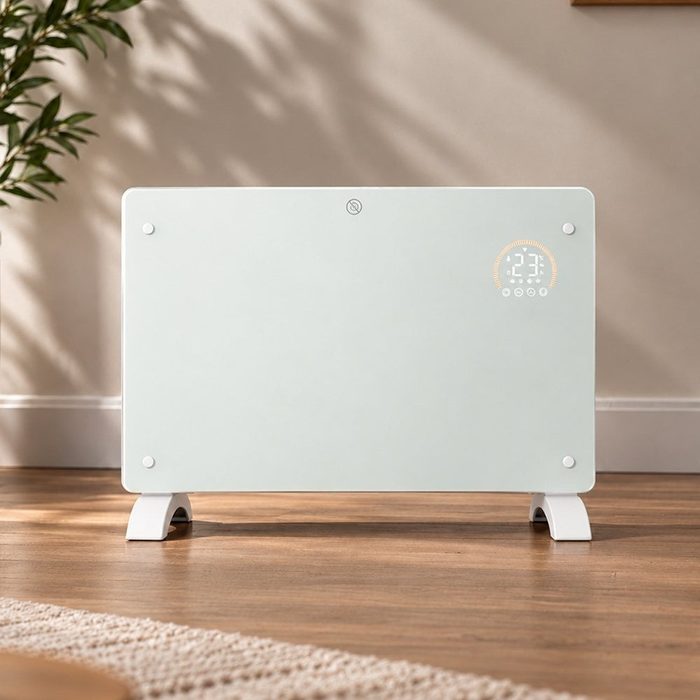
Portable panel heaters have lightweight heating elements inside, with the entire unit being placed in a slim, low-profile case. They operate using either natural convection or radiant panel technology, taking in the cold air from floor level and spreading out the warmth throughout the room without employing noisy fan blowers.
- Best suited for: home offices, dining rooms, and guest bedrooms, as these rooms place a priority on rapid warming and having a modern, uncluttered appearance.
- One of their main benefits is how quickly they respond. A panel heater starts to emit noticeable amounts of ambient heat within two to three minutes after it has been switched on, and since it has a light construction together with the floor feet or castors that come with it, they are very easy to move.
- The following points are worth noting: panel heaters having very little thermal mass cease to give off heat almost immediately when the power is switched off.
Oil-Filled Radiators: Sustained, Silent Heat Retention
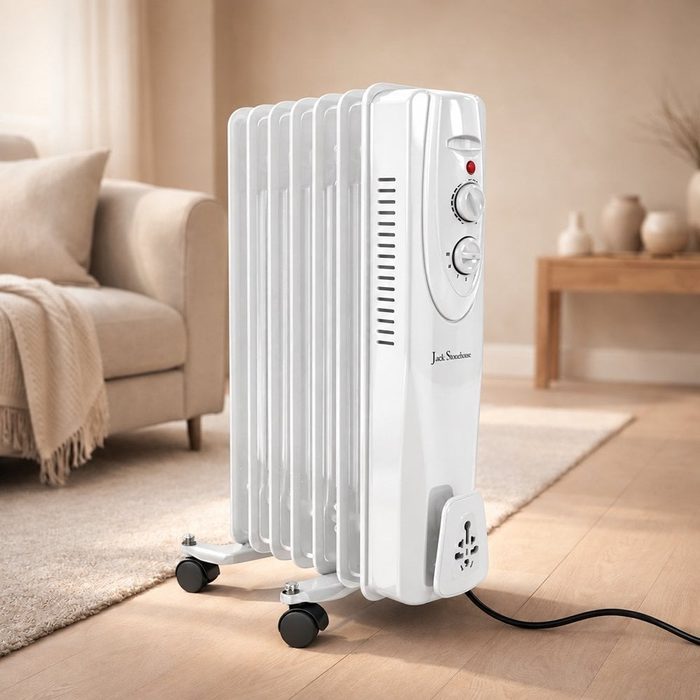
Portable radiators contain an electrical element that is submerged in oil; the oil functions as a thermal reservoir by absorbing heat and then releasing it slowly via the external metal fins.
- Best suited for: living rooms, bedrooms, and other spacious areas which require continuous, long-term warmth.
- One of the main advantages is its excellent thermal inertia, as the oil remains hot and keeps releasing heat for 30 to 45 minutes after the appliance has been switched off.
- A drawback is that it requires 15 to 20 minutes to reach full operating temperature.
| Feature / Metric | Oil-Filled Portable Radiator | Slimline Panel Portable Heater |
| Heating Mechanism | Radiant warmth and slow thermodynamic convection | Fast ambient convection and surface radiation |
| Warm-Up Speed | Moderate (15 to 20 minutes) | Fast (2 to 3 minutes) |
| Heat Retention Post-Shutoff | High (continues radiating for 30 to 45 minutes) | Minimal (cools within minutes) |
| Noise Level | Completely silent | Completely silent |
| Portability and Form Factor | Robust and heavier (moves easily on castors) | Slimline, lightweight, and discreet |
| Ideal Room Application | Lounges, all-day home working, evening bedrooms | Quick office tasks, dining rooms, occasional spaces |
| Typical Wattage Range | 1,500W to 2,000W | 1,000W to 2,000W |
How to Set Up and Operate a Portable Heater: Step-by-Step
If you want to use a portable heater safely, then you should carry out five important steps: check the cable, place the unit on a level surface, plug it into a separate wall socket, adjust the thermostat and set the timer.
Use the checklist to safely operate your unit and achieve quick and economical heating.
- Before using the appliance, carry out a pre-use inspection of the casing, the plug pins, and the power cable. If the cable is pinched, worn, or frayed, do not use the appliance. Use a soft brush or the attachment on the vacuum cleaner to remove dust or pet hair from the inlet grilles and ensure that your unit has the UKCA or CE safety mark.
- If you are using it on a flat and solid surface, then put the heater on a level and hard surface, avoiding deep shag-pile rugs, soft furniture, or any elevated platforms. In order for the safety switch on the underside to operate, it must stay firmly pressed against a solid floor.
- Insert the heater directly into a wall socket which is not being used by any other appliance, since a 2,000W heater draws approximately 8.7 amps and extension cords and multi-way splitters can overheat when they are in continuous use under a heavy load. You should always plug the heater directly into a dedicated wall socket.
- To set the thermostat correctly, turn the heater to its highest setting until the room temperature is between 18°C and 20°C; then gradually turn the dial on the thermostat back until it clicks, at which point the device will switch on and off automatically and will thus reduce power consumption by up to 50%.
- Make use of the countdown feature that is built into the system; if your heater has a programmable timer, then set it to switch off after 60 to 90 minutes so that overheating can be avoided and energy waste can be prevented in the event that you leave the room.
Zone Heating Strategy: Lowering Running Costs with Portable Heating
Heating only the rooms that are occupied by using a portable heater reduces household energy bills because the central heating thermostat can then be set to a lower level in the other parts of the house. Since it uses much less energy to heat a single room of 15 square metres than it does to heat the entire house, concentrating on portable heating can save hundreds of pounds on seasonal energy bills.
The notion that electric heating is automatically more expensive than gas is widespread. Even though gas is cheaper per kilowatt-hour than electricity on ordinary UK tariffs, central heating boilers usually waste a lot of energy by heating up empty hallways, unused spare rooms, and cold utility cupboards.
What portable heating does is heat only the room in which you are, rather than the entire house.
- Total Energy Wasted: Central boiler (24kW to 30kW) heating an entire unoccupied house
- Total Energy Optimised: Portable heater (1.5kW to 2kW) cycling in a single occupied room
The Running Cost
Among typical UK energy price caps (averaging around 25p per kilowatt-hour for electricity):
- Operating a portable heater with a rating of 2,000W (2kW) at full power for a continuous period costs approximately 50 pence each hour.
- Using a heater that has an active and calibrated thermostat, meaning it keeps the heating element on only fifty per cent of the time in order to maintain the temperature, will reduce the cost to about 25p per hour.
- On the contrary, the cost of running a 24kW domestic combi boiler to heat eight to ten radiators over the whole house generally amounts to between £1.40 and £1.80 per hour for the gas and water circulation pumps.
* Prices are an estimate and should not be taken as financial advice.
How to Execute an Effective Zone Heating Plan
- Lower the temperature setting on your main thermostat by setting the central heating thermostat to a basic background level of 15°C or 16°C; this will help to prevent structural damp and pipe freezing, as well as stopping your boiler from switching on unnecessarily.
- Ensure that the room you are using is isolated by closing the internal doors so that the heat stays in.
- So that air should not leak, draw the curtains, close the window blinds, and fit a draught excluder at the base of the door.
- Maintain the desired temperature range by using your portable heater on the low or medium setting to bring the temperature in the isolated room up to a comfortable level of 19°C to 20°C.
Essential Safety Procedures and Clearances
To use a portable heater safely, you should keep it at least one metre away from any furniture or fabrics, avoid using extension cords, and place the heater on a hard and level surface. Most important of all, never leave the heater on unattended or in use while you are asleep. You have to ensure that the appliance is certified for overheat protection and has an automatic shut-off switch which turns on if the heater is tipped over.
Statistics concerning fire safety in the UK indicate that portable heaters cause a greater than normal number of accidental house fires during the winter period, mainly because of their improper placement and because combustible materials have been left too near to hot surfaces.
The One-Metre Rule
Make sure that you maintain a clear distance of at least one metre (three feet) from your portable heater. This guideline applies to:
- Bed sheets, duvets, and blankets
- Curtains and drapery
- Sofas, armchairs, and upholstered cushions
- Piles of clothing and laundry racks (never drape wet laundry directly over a portable heater to dry)
- Books, newspapers, and packaging materials
Electrical Safeguards
- It is not advisable to use a multi-way adaptor since, for instance, if you were to operate another high-wattage appliance such as an iron, a kettle, or a hair dryer, the heater would be running at the same time.
- Leave the cords exposed and lying flat; don’t place power cables under carpets, mats, or rugs because foot traffic on cords that are hidden can damage the internal wiring and thermal energy trapped under the carpet may cause heat degradation and electrical arcing.
- In damp places, ordinary units should not be used because standard portable heaters are not water-resistant. In bathrooms, you should use heating appliances which have been specially rated and are permanently mounted with an Ingress Protection rating of IPX4 or higher, and these must be installed by a certified electrician.
Core Safety Features to Look For in a Portable Heater
- Tip-Over Protection: This consists of a mechanical microswitch or a digital sensor which switches off the power as soon as the heater tilts past 45 degrees.
- A thermal cut-off switch, which is an internal bimetallic sensor, shuts off the power when blocked air inlets cause the temperature inside to go above safe limits.
- Frost Watch Setting: This power-saving setting keeps an eye on the surrounding air and causes the heater to switch on only when the room temperature drops below 5°C, thus protecting utility rooms, caravans, or sheds against frozen pipes.
Frequently Asked Questions (FAQs)
Can you leave a portable heater on overnight?
You shouldn’t leave a portable heater running while you’re asleep. Although some appliances are equipped with automatic shut-off switches, they can still present a preventable risk of causing a fire if the duvets, pillows, or blankets move during the night. Additionally, keeping a heater running constantly in a closed bedroom can dry out the air and cause irritation of the lungs. When you need warmth during the night, then adjust your central heating to a reasonable 16°C, use a heavy-tog duvet, or select an oil-filled radiator which has a certified mechanical timer that turns itself off once you have fallen asleep.
Which is less expensive to operate, a portable heater or central heating?
A portable heater is only less expensive than central heating when it is used to heat one room which is occupied for short or moderate periods. Since the cost of mains gas is lower per unit of energy than that of electricity, it is considerably more expensive to heat an entire house with electric heaters than to use a central boiler. However, if you are working all by yourself in your home office or relaxing in the living room for four hours, running a single 1.5kW portable heater is far cheaper than turning on a 24kW boiler to heat eight empty rooms.
What is the safest kind of portable heater to use in a home?
Oil-filled radiators are generally regarded as the safest kind of portable heater to use in houses, in particular if there are children or pets around. Since their heating elements are completely sealed and have no exposed glowing coils, their outer surfaces do not attain the dangerously high temperatures that are present in fan or radiant heaters, and they also do not give off carbon monoxide. Regardless of the design, ensure that your model is equipped with certified overheat protection and an automatic tip-over shut-off switch.
What is the best location for placing a portable heater?
The optimal position for a portable heater is on a hard and level surface beside an internal wall or in a spot near cold drafts (such as underneath a draughty window), with the unit pointing inward towards the centre of the room. When you put a convector or fan heater close to a cold window, it will heat the cold air currents before those currents reach the floor. It is important to ensure that the heater is not placed in front of doorways, in areas where there is a lot of foot traffic, or in front of curtains and furniture.
Maximising Heat and Output in Your Home
In order to make the best use of your portable heater, you should take care with where you place it and adjust the thermostat accordingly. It is best to use the portable heater in conjunction with your main heating system in order to improve comfort and efficiency. When you are using the appliance, make it a habit to check it regularly, keep it at a safe distance from any fabrics, and make use of the thermostats and timers that are built into the unit to achieve both safe and economical operation.
Want to reduce your heating costs? Take a look at our complete range of energy-efficient portable heaters to discover reliable and cost-effective heating solutions for your home.
Read Next
The Ultimate Buying Guide: Which Indoor Heating Solution Is Right for You?
How to Choose the Perfect Radiator Cover
Why Should I Buy an Oil-Filled Radiator?
Comments are closed here.