
Portable Air Conditioning: The Coolest Summer Hack
When temperatures climb, your home should still be a haven. Portable air conditioners are the smart, flexible solution for cooling down your space without the cost and commitment of a full AC system. Whether you’re upgrading your home office, bedroom, or conservatory, these units are efficient, adaptable, and surprisingly easy to maintain.
But how do they work? Do you have to vent them out a window? And are they electricity guzzlers or energy-wise warriors?
This blog will dive into the essentials, covering topics from how portable air conditioners work to how to vent a portable air conditioner without a window.
Table of Contents:
- How Do Portable Air Conditioners Work?
- Common Questions About Portable Air Conditioners
- How to Clean a Portable Air Conditioner
How Do Portable Air Conditioners Work?
In simple terms, portable air conditioners pull warm air from your room, cool it down using refrigerant and condenser coils, and then push the heat out through an exhaust hose — usually out a window. What’s left is cool, dry air that keeps your space feeling fresh and comfortable.
They’re especially ideal for renters, occasional use in guest rooms, or spaces where permanent installations aren’t an option. No bulky units or drilling into walls — just plug in, vent, and chill.
Common Questions About Portable Conditioners
Do Portable Air Conditioners Have to Be Vented Out a Window?
Short answer? Yes, portable air conditioners do need to be vented, but not necessarily out a window. The unit needs to send hot air somewhere, or you’re just moving warm air around. If a standard window isn’t available, try these smart alternatives:
- Sliding doors: Use a door vent kit for easy installation.
- Wall vents or dryer vents: You can redirect hot air through existing ductwork with the right adapter.
- Ceiling tiles (only in commercial spaces): Vent upwards if your setup allows.
When making such considerations, it’s always worth browsing a selection of air conditioning units that feature vent-friendly options, remote control convenience, and compact designs.
Do Portable Air Conditioners Use a Lot of Electricity?
It depends on the size and energy rating of the unit – but modern models are surprisingly efficient. Many come with energy-saving modes, smart temperature sensors, and timers, so you’re only cooling when and where needed.
To keep energy costs low:
- Close doors and windows to prevent heat from creeping in.
- Draw blinds during peak sun hours.
- Use the ‘sleep’ or ‘eco’ mode at night.
If you’re cooling a small space (like a bedroom or home office), a unit between 7,000–9,000 BTUs (British Thermal Unit, a measurement of thermal energy) is often more than enough. Go higher for larger rooms or open-plan areas — but don’t overdo it. Oversized units can short-cycle and waste energy.
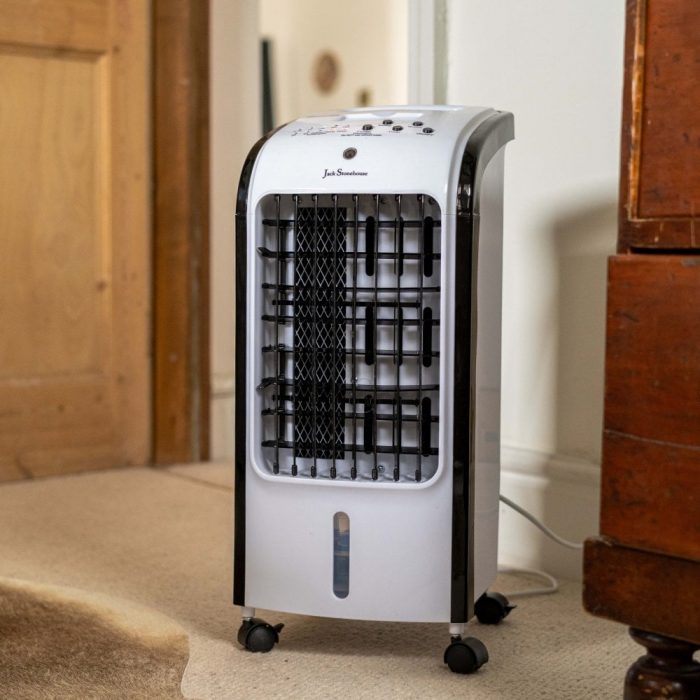
Jack Stonehouse 3-in-1 Portable Air Conditioner
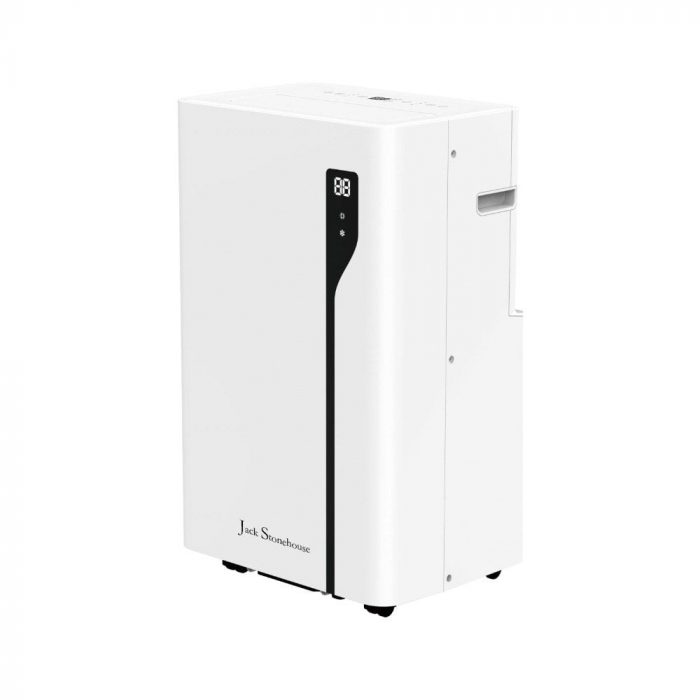
Jack Stonehouse Portable Air Conditioning Unit.
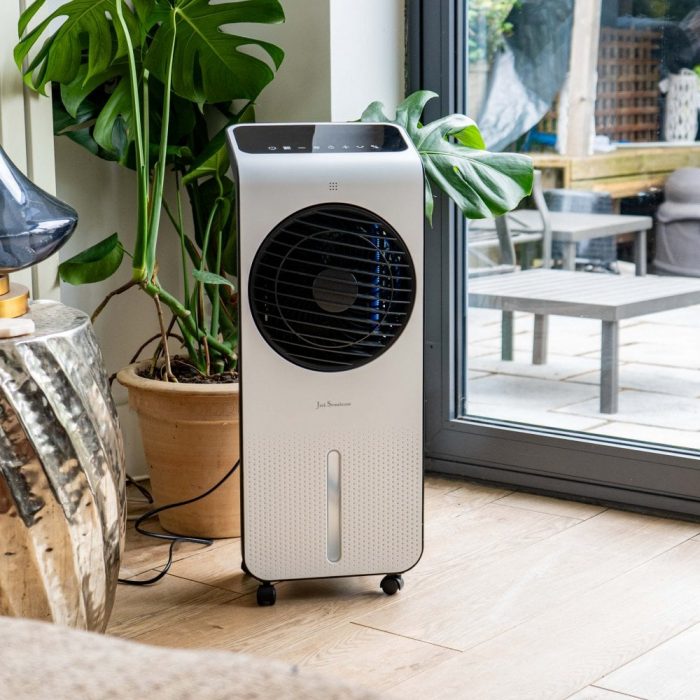
Jack Stonehouse DC Vortex Portable Air Cooler.
How do I Vent a Portable Air Conditioner Without a Window?
No windows? No problem. Here are a few creative options for venting your unit:
- Through a patio door using a vertical sliding door kit.
- Via a ceiling tile in a drop ceiling (perfect for office use).
- Repurposing a dryer vent (if compatible with your AC’s hose size and airflow).
Whatever method you choose, the key is to direct hot air outside. If it lingers indoors, your AC will be fighting against itself.
How do I Drain a Portable Air Conditioner With a Hose?
Some units self-evaporate, but most will accumulate moisture – especially in humid UK weather. Here’s how to drain yours efficiently:
- Switch off and unplug the unit.
- Locate the drain port (usually at the bottom).
- Attach a drainage hose to redirect water to a sink, bucket, or floor drain.
- Remove the plug and let the water flow.
- Replug, and you’re good to go.
If you use the unit in dehumidifier mode, you’ll want to check drainage more frequently or permanently connect the hose.
How to Clean a Portable Air Conditioner
Regular cleaning keeps your unit running efficiently; it extends its life, reduces smells, and prevents dust recirculation. Here’s your quick maintenance checklist:
- Clean the air filter every two weeks. Vacuum or wash it with warm, soapy water.
- Dust the vents and wipe the exterior with a soft, damp cloth.
- Avoid harsh cleaners.
- Check the evaporator coils and clean gently with a soft brush or coil cleaner.
- Empty the water tank (or ensure the hose is properly connected).
We recommend giving your unit a full clean at the start and end of every summer. It takes 15 minutes and makes a world of difference.
Explore our full range of Portable Air Conditioners at Jack Stonehouse
Portable air conditioners are a smart way to beat the heat without committing to costly installations. They’re compact, versatile, and, when used correctly, surprisingly efficient. Just remember: proper venting, routine draining, and simple cleaning go a long way in keeping your unit in peak condition.
Enjoy cool, comfortable living all season long with the right portable air conditioner for your home.
Related Articles:
Comments are closed here.